

a fresh, bold, & faithful
witness in the world
Featured Resources





Church Anew Blog





Follow Us On Social



Somehow this week I ended up spending the majority of my non-working hours doing research on a little known side character in the story of Saul found in the Hebrew text of 1 Samuel 28. AS ONE DOES.
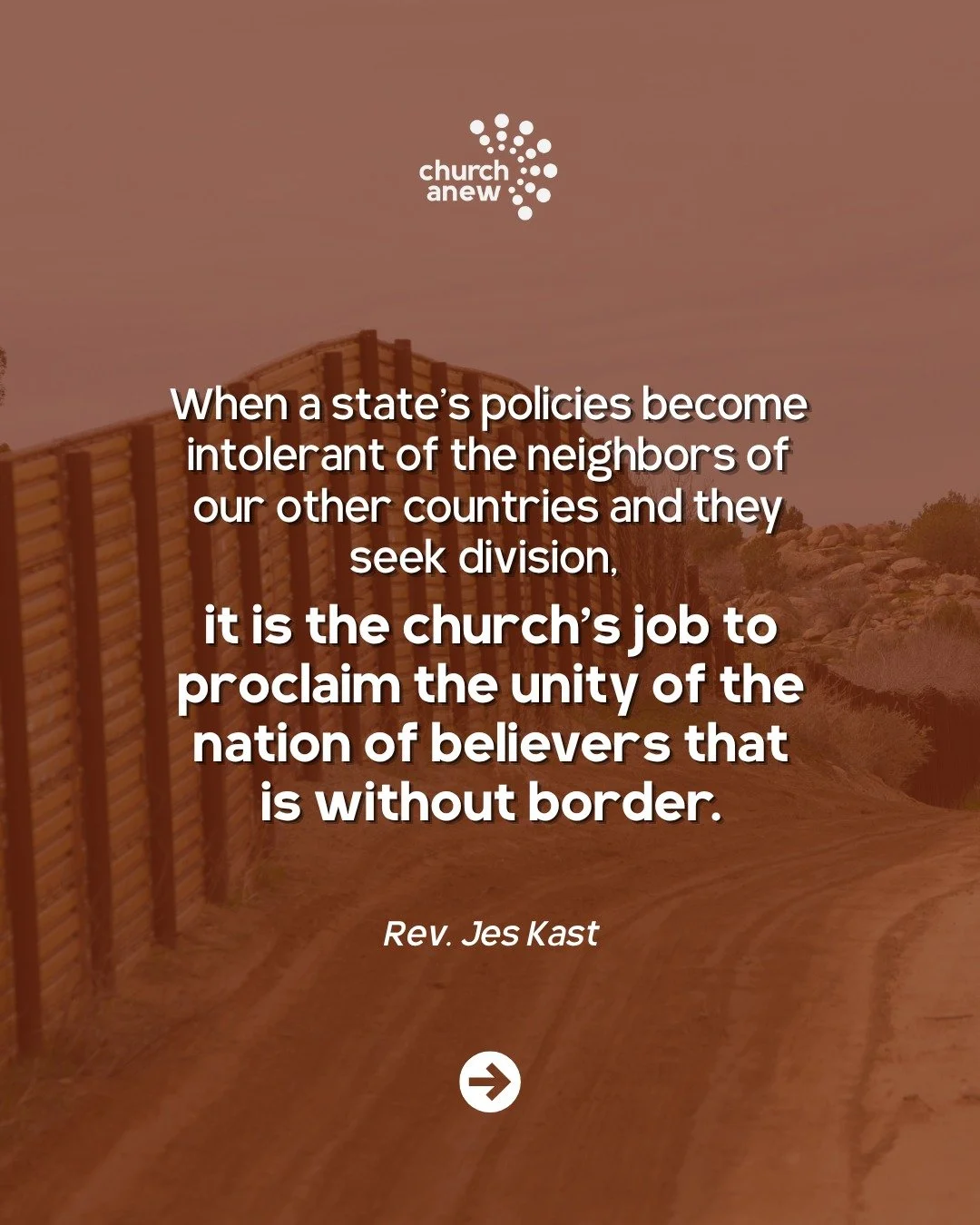
When a state’s policies become intolerant of the neighbors of our other countries and they seek division, it is the church’s job to proclaim the unity of the nation of believers that is without border. It is the church’s duty to remind both the church and the world that the love of neighbor is the foundation to the Gospel of Jesus Christ.
Much of the loss to church participation in U.S. Protestantism is simply a loss of casual participation and affiliation.
Four years later, our building has 200 reservations a month, with thousands of people passing through our doors. Documentary showings, protest rallies, 12-step groups, mutual aid circles, and free meals fill our building from sun up to sundown–all of them values-aligned, community-benefitting events that create real Gospel impact, whether or not they are explicitly faith-based.
In all the headlines about “the decline of the church,” we are missing that a lot of people still have much they believe in, and they are still deeply faithful. Many of them just don’t see the church as speaking to what they are experiencing every day.
Ableism
has always tried
to turn disability itself
into the problem.
As though the injustice
is the wheelchair
instead of the stairs.
The autistic child
instead of the cruelty.
The chronically ill body
instead of the systems
that abandon it.
The incense of myrrh is made from “tears” formed when the sap of the myrrh tree hardens after cuts in the trunk expose the sap to air. Myrrh comes from tears.
When we see John’s accounts of Mary Magdalene as a throughline from her bearing witness to Jesus raising her brother Lazarus from the dead, to anointing Jesus’ feet with pure nard, and then staying steadfast at the foot of the cross, and then — come Easter morning — refusing to leave the Garden when the tomb is found empty, demanding, even, of a man she mistakes as the Gardner “Where did you put my Lord?” so that she might go rescue his mutilated corpse — when you see this throughline of this disciple, this leader, Mary Magdalene, we see why she is called Mary the Tower.


Follow Us On Social