

Recent Blog Posts
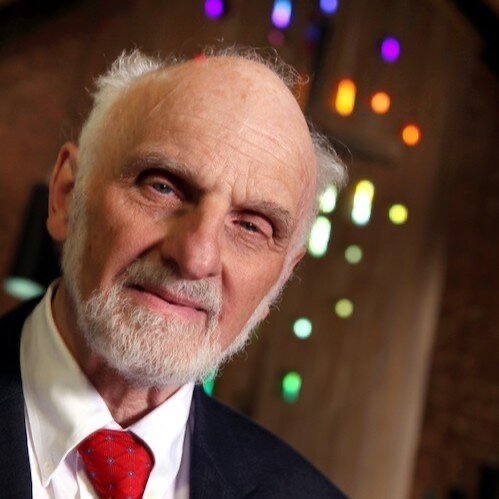
Walter Brueggemann writes on the church's potential as an outsider to the social order, and how it can reach across societal stratification.
The human domination of creation has specialized in unrestrained, arrogant dominion of creation as if it were a useful system and resource without limitation.
The wisdom tradition of ancient Israel reflected, long and deep, upon... the world of accumulation, greed, and restless satisfaction of endless appetites.
It is God the creator who sends,
grows,
produces,
dispatches.
in a generative summons to work required of the earth.
Mark 10:46-52 affirms the basic tenets of the disabled people’s movement, that the barriers faced by persons with needs who want access to wellbeing are often humanly constructed barriers.
Just now we are grateful for Cory Booker,
for his long-running speech,
for his testimony to good governance,
for his integrity that does not flinch from truth-telling.
In the wake of this moment in our shared democratic experiment,
we may hope and expect positive response from all of our people,
with affirmation for poor people alongside rich folk,
with glad acknowledgement of men and women and free gender delineations,
with full participation by the vulnerable and a refusal of their dismissal or disposal.
Indeed for modern day leaders “drill, baby drill” becomes the solution to all economic problems. The community gathered around them, moreover, is simply a replay of the old exhibitionist effort of the ancient regimes that exuded hubris, recognizing no restraints.
Because we know about trust in the endless, generous abundance of the creator, we are able to practice abundance in the neighborhood, and so generate wellbeing for our neighbors who themselves may lack sufficient resources.
There can be little doubt that when we learn to reread the Bible, we will inescapably learn to read our own national history with more discerning eyes in a way that invites us to think again about our current national role in the world.
Thus I judge that the pastors, preachers, and teachers of the church have a distinct possibility and wondrous opportunity to articulate a world other than the one subject to the force of the Nihil.
For much too long, the church has made wellbeing (salvation!) a personal, individualistic subject. But of course the truth is quite otherwise.
To be “awakened” is to be able to recognize that our best certitudes are displaced and negated by the order of God’s love in and for the world.
The speech writer had it right; we are on our own in speaking, except for images, metaphors, traditions, and familiar cadences.
It is exactly that attentiveness and restorative work [of Christ] to which the church is summoned in its resistance to impatient ruthless disposal by the dominant economic community.
We sing in joy, in resolve, and in defiance. [...] We sing in glad welcome, unlike the commercial world that is eager to return to business as usual.
A defining claim in our common life, and therefore defining subject for gospel reflection, is the alienation and hoped-for reconciliation between fathers and sons.
[The tenth commandment is] a dire warning against economic practices and land policies that permit the strong to occupy and control more and more of creation at the expense of needy neighbors, and at a cost to the wellbeing of creation.
...Jesus restored to full life those who had been dismissed, discounted, and discarded by an economy too busy to notice, an economy bolstered and legitimated by religious claims made for and by “better” people.
The work is to narrate, and narrate again, the pain of the world, the injustice of society, and the prospect for relief and recovery.
The practice of Christmas is not simply much bell ringing that echoes the goodness of God. The news is that God has heard the clanging of the chains of bondage and has moved against [it]…
Peacemaking requires the Lordly graciousness of God; it also insists on the daily work of adjudicating the neighborhood to assure that all may share in a common good that provides the necessities for a viable, secure life.
The good news entrusted to the church is that the God of the Gospel is indeed to us as an attentive receptive mother, as an attentive, receptive friend.
...it will be important that the church be engaged in that daily assault on denial, precisely because it is the truth, and only the truth, that can make us free.
Even when it feels like we're alone, God reminds us: you have allies, you have purpose, and you have work to do.
So imagine—a church of hope that gathers yet again to affirm the abundance, hospitality, forgiveness, and peace-making reality of God.
The good news is that we are not and need not be propelled by the negating work of God, of Satan, of the devil, or the id.
Without a capacity for embarrassment, every greedy selfish action is accepted as legitimate.
Walter Brueggemann
Walter Brueggemann is surely one of the most influential Bible interpreters of our time. He is the author of over one hundred books and numerous scholarly articles. He continues to be a highly sought-after speaker.
Brueggemann was born in Tilden, Nebraska in 1933. He often speaks of the influence of his father, a German Evangelical pastor. Brueggemann attended Elmhurst College, graduating in 1955 with an A.B. He went on to Eden Theological Seminary, earning a B.D. (equivalent to today’s M.Div.) in 1958. He completed his formal theological education at Union Theological Seminary in 1961, earning the Th.D. under the primary guidance of James Muilenburg. While teaching at Eden, he earned a Ph.D. in education at St. Louis University.
Brueggemann has served as faculty at two institutions in his career: Eden Theological Seminary (1961-1986) and Columbia Theological Seminary (1986-2003). He is currently William Marcellus McPheeters professor emeritus of Old Testament at Columbia.
Brueggemann’s primary method with the text is rhetorical criticism. Words matter to Brueggemann, and one can tell that by listening to him speak as he hangs on to particularly theologically significant words. His magnum opus, Theology of the Old Testament (1997), is a rhetorical-critical look at the Old Testament through the lenses of “testimony, dispute, and advocacy.”
Many have come to know Brueggemann through his book entitled The Prophetic Imagination, originally published in 1978. His best-known work, however, may be with the Psalms. Numerous church leaders have used his Message of the Psalms as a new way of organizing and processing the Psalms. He has been writing about the Psalms since 1982, and he continues to this day with a commentary published in 2014.
Church leaders find a friend in Brueggemann, an ordained minister in the United Church of Christ. His work inspires, energizes, and convicts, and he often makes time to interact personally with those to whom he speaks at large events.
He is a longtime St. Louis Cardinals/Browns fan.
Brueggemann and his wife Tia currently reside in Traverse City, Michigan.