Christmas From Below
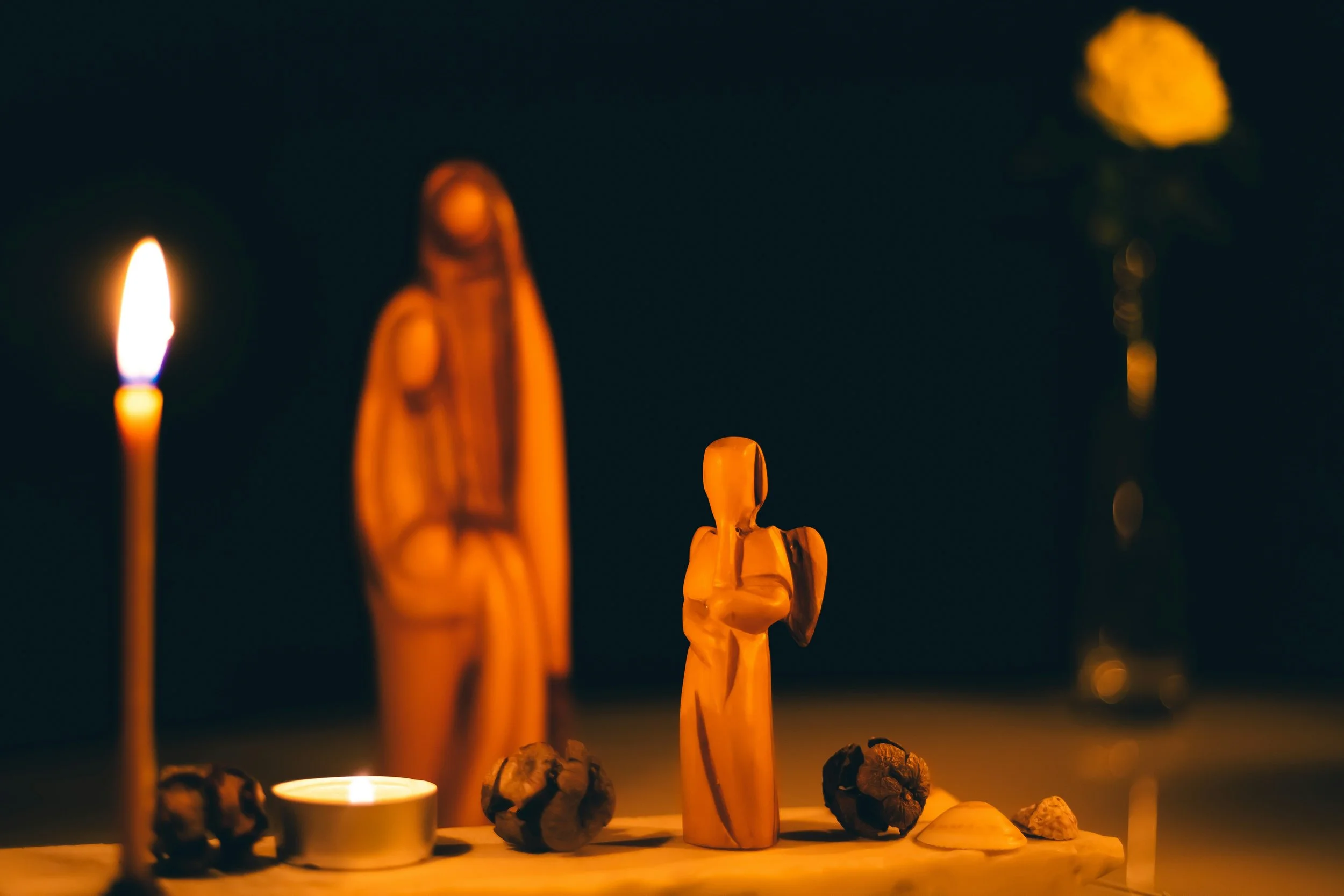
Photo by Viktor SOLOMONIK on Unsplash
It is often difficult (and occasionally career-risking) to talk about class in the United States. We are generally far more comfortable speaking about individual morality, generosity, or vague notions of kindness than we are naming labor, poverty, or economic vulnerability. Even in the Church, attention to economic marginalization can feel welcome only so long as it remains abstract and non-disruptive. And yet, when we turn to the Gospel accounts of Christmas, to avoid questions of precarity is to miss a major theme of the story. The Gospels center the experience of the marginalized.
As many of us prepare reflections, sermons, and prayers for Christmas, this dimension of the story deserves retelling. Since the summer, I’ve been accompanying immigrants on many Fridays to their initial asylum hearings in New York City, watching as judges decide people’s fates while ICE agents loom over and harass asylum seekers at every turn. That experience has led me to hear the Christmas story with different ears this year – namely, as Good News proclaimed to people living on the edge of an abyss.
Biographies were not rare in the ancient world and the Gospels do have many features in common with non-Christian examples. Yet these Christian books are an unusually ‘down-market’ variety of biography, in which ordinary people reflect on their experience of Jesus, where the powerful and the beautiful generally stay on the sidelines of the story, and where it is often the poor, the ill-educated and the disreputable whose encounters with God are most vividly described.
At its core, the Christmas story – especially as told by Matthew and Luke – is narrated from below. God’s decisive action does not unfold in comfortable palaces or administrative centers, and the Jesus that is born is not, in fact, a CEO. Instead, the story unfolds in hovels, workshops, fields, and along routes traveled by people fleeing authoritarian regimes. Those who recognize what God is doing in the world are people whose lives are shaped by danger, denigrated labor, and deep uncertainty.
This becomes clear when we pay attention to who is foregrounded in the narratives.
Mary occupies one of the most precarious positions in the story because of her social location in first-century Palestine. She is young, poor, female, and betrothed but not yet married. Pregnancy under these conditions carried serious social risk within honor-shame frameworks (see Deut. 22:13–21), and she narrowly avoids being trapped in a state of public dishonor.1 Luke places on Mary’s lips the Magnificat (Luke 1:46–55), a song announcing concrete reversals: the proud scattered, the powerful brought down, and the lowly lifted up. Scholars have long noted its echoes of Hannah’s song, and some trace its origins to the less familiar (to Protestants, at least) story of the Maccabees, an instance in which Israel successfully overthrew imperial domination.2 Mary’s song is a proclamation of hope for a new Kingdom that overturns the violence of Rome’s empire.
Joseph, whom Matthew describes as a tekton – that is, a day laborer, craftsman, or carpenter – belongs firmly among the working poor.3 When we hear the word “carpenter,” we may imagine an artisanal shop producing fine tables and chairs. We should think instead of a day laborer hired on exploitative terms for large construction projects, not unlike many Salvadorans who work under the table at the most dangerous job sites in New York City. Joseph, significantly, receives divine guidance not through priests, scribes, or courts, but through dreams, considered a commoner’s mode of revelation in antiquity.4 He protects Mary from public shame, claims a child not biologically his own, and later flees political violence with his family, becoming a refugee in Egypt (Matt. 2:13–15).5
Elizabeth and Zechariah are aged and childless, both conditions marked by stigma in the ancient world.6 Luke intentionally situates their story alongside earlier biblical narratives such as that of Sarah and Abraham, through whom God acts in unexpected ways.
The shepherds offer one of the clearest examples of marginalization rooted in labor. While later Christian imagination has romanticized shepherds, first-century sources depict them as a form of dishonorable work. Their labor kept them away from home, exposed them to suspicion of theft, and aligned them with other distrusted trades such as sailors and tanners.7 Luke’s decision to send angels to shepherds is a pointed theological choice about who are to be among the first to know and see that God’s Son was born.
Speaking of the newborn Jesus, we can emphasize how he was born into material insecurity. Luke notes that there is no room in the inn (Luke 2:7), while Matthew quickly places the child under threat from Herod’s violence. The holy family becomes displaced, fleeing state terror and living as refugees in a foreign land.8 From the beginning, then, Jesus’ life is shaped by poverty, danger, and political threat.
In addition to the above, just as revealing is the matter of who remains at the margins of this story. Kings, governors, and religious elites appear largely as background figures, or even as threats. This pattern reflects something distinctive about the Gospels themselves. In a key passage from Christianity: The First Three Thousand Years, historian Diarmaid MacCulloch observes:
“Biographies were not rare in the ancient world and the Gospels do have many features in common with non-Christian examples. Yet these Christian books are an unusually ‘down-market’ variety of biography, in which ordinary people reflect on their experience of Jesus, where the powerful and the beautiful generally stay on the sidelines of the story, and where it is often the poor, the ill-educated and the disreputable whose encounters with God are most vividly described.”9
MacCulloch helps us see that the centering of “the poor, the ill-educated, and the disreputable” in the Christmas story is not incidental. Matthew and Luke are doing something that makes the Gospels unique by telling the story from the perspective of those least likely to be centered in ancient literature. Beauty, power, and prestige do not disappear – the wise men do pay homage, after all – but they aren’t the main characters of the story. What comes into focus instead are workers, women, fleeing migrants, aging bodies, and births that take place in less than ideal circumstances and under the shadow of a violent empire.
Christmas is where all of these themes rise to the surface. The story does not romanticize poverty, but neither does it soften its hardship, and the coming of Emmanuel is a reminder that this is precisely where God chooses to dwell.
1 Deuteronomy 22:13–21; see discussion in The Jewish Annotated New Testament, ed. Amy-Jill Levine and Marc Zvi Brettler (Oxford: Oxford University Press, 2017), 167.
2 Diarmaid MacCulloch, Christianity: The First Three Thousand Years (New York: Viking, 2010), 65–66. MacCulloch discusses the likelihood that both the Magnificat and Zechariah’s Benedictus originated as victory songs from the Maccabean revolt.
3 The New Oxford Annotated Bible (5th ed.), note on Matt. 13:55
4 Bruce Malina; Richard L. Rohrbaugh. Social Science Commentary on the Synoptic Gospels (Kindle Locations 389-407). Kindle Edition.
5 Matthew 2:13–15; John Muddiman and John Barton, The Gospels (Oxford Bible Commentary); Oxford: Oxford University Press, 2001), 33–35
6 Luke 1:5–25; The Jewish Annotated New Testament, 167.
7 Malina and Rohrbaugh, Social-Science Commentary, Kindle locations 4947–4951.
8 Matthew 2:13–23; Brettler et al., New Oxford Annotated Bible, 1828.
9 Diarmaid MacCulloch, Christianity: The First Three Thousand Years (New York: Viking, 2010), 77.