
Church Anew Blog

Can We Stop Asking, “What Is Our Church Doing Wrong?”
Much of the loss to church participation in U.S. Protestantism is simply a loss of casual participation and affiliation.

Our Small Church Building Sustains Itself on 200 Community Reservations a Month – Here’s How We Did It
Four years later, our building has 200 reservations a month, with thousands of people passing through our doors. Documentary showings, protest rallies, 12-step groups, mutual aid circles, and free meals fill our building from sun up to sundown–all of them values-aligned, community-benefitting events that create real Gospel impact, whether or not they are explicitly faith-based.

A Theology of Who We Are
In all the headlines about “the decline of the church,” we are missing that a lot of people still have much they believe in, and they are still deeply faithful. Many of them just don’t see the church as speaking to what they are experiencing every day.

They asked disability justice
Ableism
has always tried
to turn disability itself
into the problem.
As though the injustice
is the wheelchair
instead of the stairs.
The autistic child
instead of the cruelty.
The chronically ill body
instead of the systems
that abandon it.

We Need More Myrrhbearers
The incense of myrrh is made from “tears” formed when the sap of the myrrh tree hardens after cuts in the trunk expose the sap to air. Myrrh comes from tears.
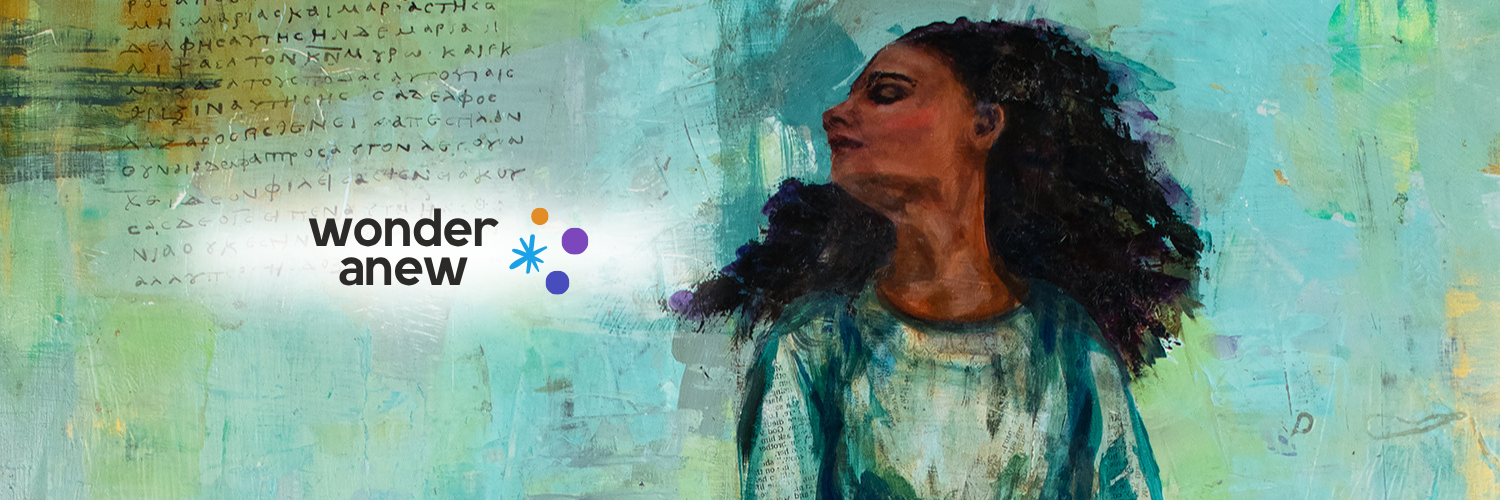
The Ungovernable Mary Magdalene
When we see John’s accounts of Mary Magdalene as a throughline from her bearing witness to Jesus raising her brother Lazarus from the dead, to anointing Jesus’ feet with pure nard, and then staying steadfast at the foot of the cross, and then — come Easter morning — refusing to leave the Garden when the tomb is found empty, demanding, even, of a man she mistakes as the Gardner “Where did you put my Lord?” so that she might go rescue his mutilated corpse — when you see this throughline of this disciple, this leader, Mary Magdalene, we see why she is called Mary the Tower.

Midnight Wrestlings
It calls back something in Jacob, about the blessing that he stole, the one that caused the rift between him and his brother, that sent him into exile for twenty years. That’s not this one. This blessing is for him. It’s really his. He is finally worthy of his own blessing.

War and the Bible: A Mixed Witness
Within the Bible’s many pages are texts that sanction military violence, impose limits on its use, and imagine a world beyond it. Given the diversity of social settings—and the more than thousand years over which these texts were composed—this should hardly surprise us. The Bible’s reflections on war are every bit as complicated as our own.

Queering the Trinity
Queerness was (and is) much more than about the gender of people in a relationship – it was about changing everything society expected about race, money, and identity. Queerness also created (and creates) a community where people made sacrifices to protect and encourage others without personal gain. Queerness is embracing the fullness of oneself no matter how that may manifest (or at least an ongoing attempt towards it) as well as how that manifests in relationships with others.

What If Young People Actually Do Want To Go To Church?
Young people know, in the wake of lockdown and in this current political nightmare, that we really need incarnate community. We are desperate for analog spaces. We live far from our families and miss being a part of intergenerational life. We want a third space that isn’t measuring us for company cuts or expecting a tip. Young folks are actually really hungry for church. The church just had to be ready for us.

The Bible on “No Kings!” (Part III)
Here and now—in the “in between” time of human governance—God’s rule is bracketed. The Lord’s kingship in the past has been rejected and the Lord’s rule in the future is not yet. In this “in between,” God’s rule feels absent, if not altogether impossible. This “in between” is nothing less than a God-shaped vacuum, into which step more and more petty, power-hungry kings and kinglets, queens and queenlets, replete with their entourages made up of foolish, vulgar advisors, all of whom want to fill that vacuum, assume God’s position, arrogate to themselves that kind of authority.
The Bible on “No Kings!” (Part II)
The closeness of the royal palace to the Temple was (and is!) unacceptable to God. That situation can stand no longer. Idolatry, of gods and of powerful human beings, must be put away. The only way for God to reside among the people forever is by enacting “No Kings!” for the same interminable duration.
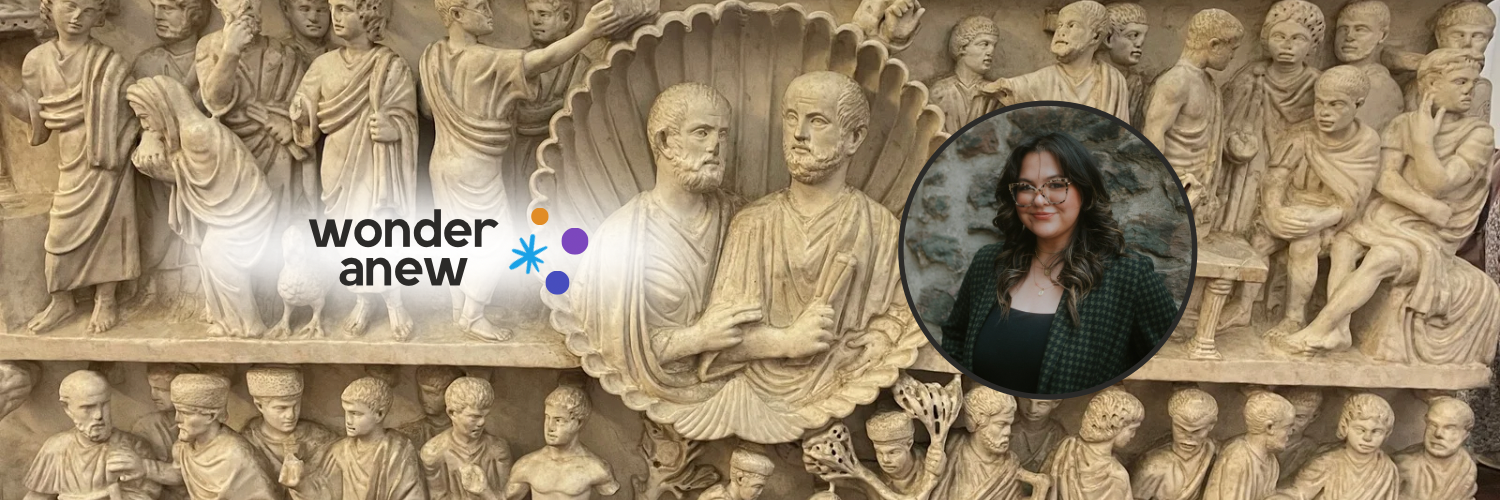
“History Will Say They Were Brothers”: Queer Love in Early Christianity
The truth is, Christians have been subverting and challenging the heteronormative standard for centuries. In fact, it was the early church’s queerness that caused it to grow and spread so rapidly. The earliest Christians were known for their radical acceptance of people from every status, gender, and culture. They were chastised for the ways they redefined family, defied status markers, and cared for the poor and needy.
The Bible on “No Kings!” (Part I)
America’s revolutionary rejection of oppressive rulers is no doubt why “No Kings!” has been applied to many a political leader ever since the 18th century. But whatever one thinks of this slogan—its aptness or inaptness with reference to politicians, whether current or long gone—those of us who care about Scripture should think immediately, first, and foremost of the Bible when we hear it.

Shielding the Joyous
When I feel the most joyless is when it is most essential for me to practice joy, to seek out this Godly abundance. Not to disassociate. Not to demean my own suffering or the realities that have brought me low. But because God calls — compels — us to remember: the things that speak death over us don’t get the last word.

Hope for the 21st Century Leader
Our egos won’t allow us to open our hands and release the power that we have to empower others to do the work.

Strategic Ambiguity: Rendering Unto God and Caesar
The Jesus comparisons, the Truth Social imagery, and the Caesar-like symbolism all point toward a troubling trajectory: a national careening toward a distinctly American form of emperor worship, one clothed in the language of white Christian nationalism.

It All Counts: Author Q & A with Rev. Natalia Terfa
I think about all these people floating around in the world who aren't gonna walk into a regular church – for whatever reason. When I started asking, “What are those reasons?”, there were so many answers that sounded like: “I found this thing that is meaningful, but someone said you can’t do it that way.” And the throughline became me saying: “Why? Why not?”
Trusting in the Way
And Jesus says, I’m the way.
You have me.
You already know everything you need to know because you know me.
Render Unto Caesar? A Tax Day Reflection
What does it mean to balance religious identity with loyalty to a nation? And when, if ever, should believers practice tax resistance in response to unjust authority?
Get Updates in Your Inbox
Want to stay up-to-date with the Church Anew Blog? Sign up for our weekly blog round-up.

EXPLORE OUR ARCHIVE OF ARTICLES FROM