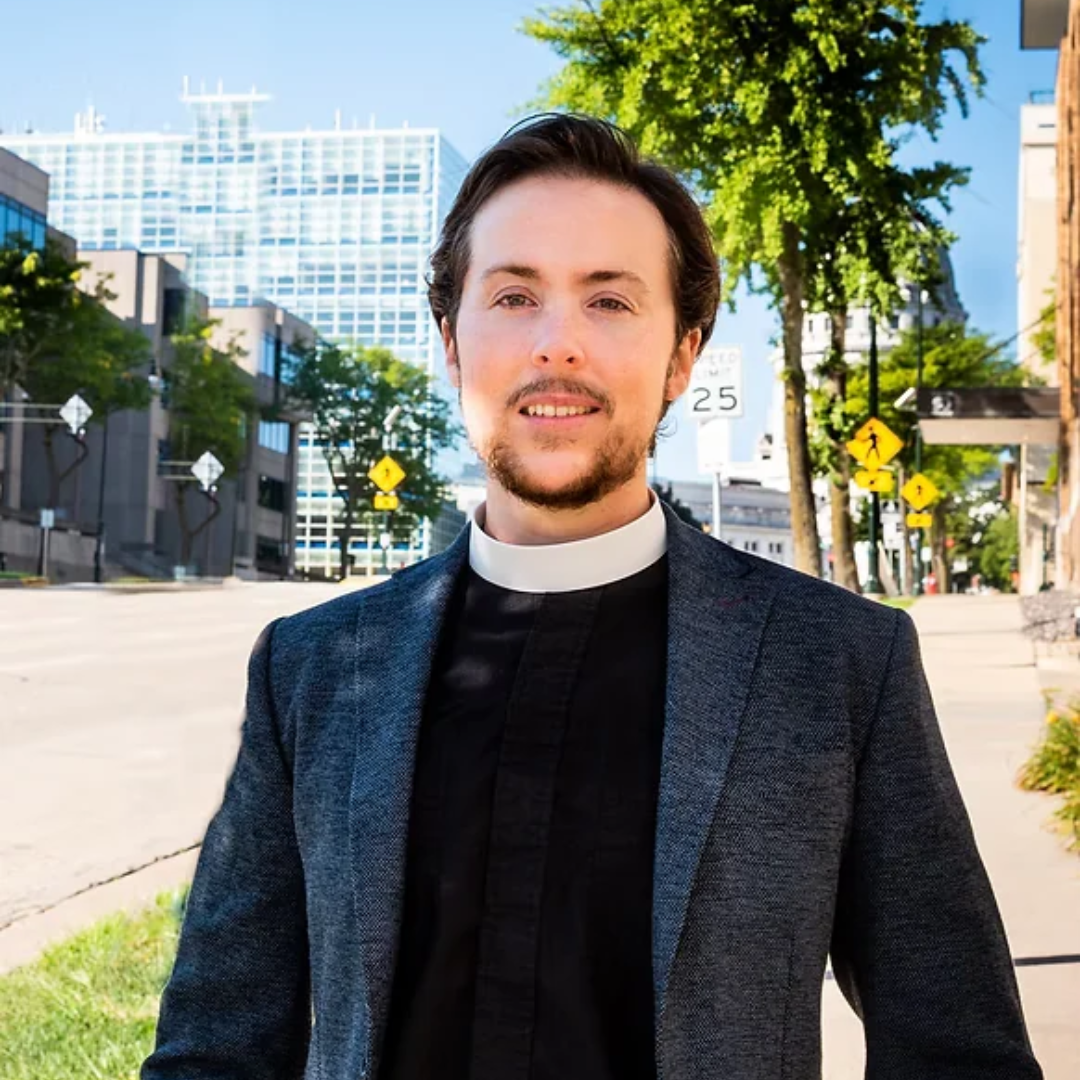
Photo by Ronan Furuta on Unsplash
"Pursue the well-being of the place where I have sent you, for in its wellbeing, you will find your wellbeing."
(Jeremiah 29:7, paraphrased.)
When I was 16 my father told me he would kick me out of the house if I came out as gay. Knowing the struggle LGBT youth faced with homelessness in the late 1990s and early 2000s (According to the National Center for Youth, 40% of homeless youth were LGBT and homeless because of conflicts with religious families), I went back in the closet. Graduated from high school at 16, got a job, and bought my first house at 18, and only then, after I was safely moved out of my family home, did I come out as queer to my family. The fear around being homeless and the stark need for housing that is affordable to people working moderate income, entry level jobs, was woven into my identity.
Fast forward two and a half decades, and as a Lutheran pastor who has led the three congregations I have served through major building projects to transform their real estate for community flourishing, I continue to wrestle with how we as religious leaders and congregations use our real estate for community good, rather than treat it like an idol we worship on Sunday morning.
Too often our fears around liability, insurance, and potential issues with taxation, and our fragility around a broken coffee pot, misplaced china, or a banged up piano, make us reticent to share our building as an asset and gift with the broader community. We are like the mice in the book, “Who Moved My Cheese”, fearful and not trusting our ability to change, rather than trusting in God’s generosity and abundance. (The group that broke your coffee pot, may also be the group that left 300 compostable cups for your feeding ministry, or shoveled the sidewalk during a snow storm.)
With the rise of Christian Nationalism, and the dark turn our country is taking, we as religious leaders (and I’m talking about *you* who are reading this article - lay or ordained - you are a leader in your faith community) have a responsibility to put our money where our mouth is and actively use the most substantial asset many of our congregations have (our building and real estate) to do tangible good in our community. This creative use of our space is a way of making amends, witnessing to God’s abundant mercy, and repairing some of the harm the institutional church has done in Jesus’ name.
When I served as a judicatory leader on a synod staff, I observed many congregations where if they closed, their neighborhood would not have noticed. They were congregations that had grown insular, frightened by a theology of scarcity, whose primary concern was keeping the lights on, steeple repaired, or updating the boiler, rather than asking how they were engaging in meaningful ministry and stewarding their property as an asset for the well-being of the broader community. I also met a handful of exemplar congregations, whose focus was on the number of meals served, the number of kids from the community who had access to quality afterschool programing or music education, and the number of seniors cared for, who cultivated and practiced the skills needed to listen to their neighborhood and seek ways of using their space for community flourishing.
Lawndale Community Church in Chicago, IL is one of those exemplars.
Founded in 1978 by a group of African-American high school students and their (white) coach, Wayne Gordon, Lawndale Community Church has become a major force in the field of Christian Community Development. When the young people noticed their community needed affordable healthcare and a workout space, they pooled their resources and purchased their first (abandoned) building, putting in sweat equity to transform it into a health clinic and basketball court open to the community. Since then Lawndale has built significant affordable housing, medical clinics, legal clinics, a medical school, and a Juvenile Restorative Justice Hub.
The Reverend Dr Jonathan Brooks, a Black man and lead pastor of Lawndale Community Church, has taught brilliantly about the interlinking of reparations owed to the Black community and repair.1 Rather than pointing the blame only at people outside his community, and taking on the role of the victim (a role that is ultimately disempowering and defeating), “Pastah J”, as he is affectionately called, proclaims that we all – Black or White, gay or straight, cis or trans – all of us have fallen short of the glory of God, and all of us are also called and gifted to do meaningful ministry as our part in repairing the world. In his preaching, I hear echoes of our Lutheran theology, that we are all Sinners and Saints, called to live boldly and engage in God’s mission for the sake of the world.
Even for those of us who have encountered hardships and trauma, it is incumbent on us to whom much is given (Luke 12:28) to do our best to repair some of the damage done intentionally or inadvertently in God’s name. This orientation toward repair does not mean we will get it right the first time, but that we are called to wrestle and steward, change and adapt, iterate and innovate, and be a beacon of light, hope, and peace for our neighboring communities that are hungry for God’s grace.
I know too well how much repair the church has to do. Decades ago on a trip to San Francisco, I remember standing in front of a historic church, wanting to pick up a rock and hurl it through the stained glass window. That anger doesn’t disappear, nor does the institutional harm that created it dissipate, without intentional acts of repair. The church must acknowledge the way it has hurt marginalized communities, and invest in fixing that harm. That repair does not happen through lip service, or empty platitudes, or apologies from denominational officials (cheap grace which costs nothing), but from real people in real communities who sacrifice their buildings and institutional assets for the sake of mission.
This call to stewardship does not only apply to big-city, urban churches that have extensive campuses and a land value in the millions. All of us, wherever we are located, are called to engage in repair and stewardship for community well-being, aware of the unique context in which we are placed.
If you choose to embark on this call to align your congregation’s money and real estate with God’s mission, there are a few essential skills to help you in the process:
Listen to the community surrounding your congregation. Whether you are a rural congregation with cornfields and cows surrounding your building, or a suburban or urban congregation, make time to listen to your neighbors about their fears, wants, and needs, and the assets and gifts they bring to share.
Create space to listen internally to your congregation and grieve the limiting narrative of the glory years (typically from the 1950s to 1970s). This can take place during Lent in interactive, creative, embodied Wednesday evening services, through small group gatherings, or a variety of the two.
Casts a vision for what flourishing looks like - not only for the congregation, but for the surrounding community, asking:
What positive difference is God calling your congregation to make in your broader neighborhood and ecosystem where you live?
If your church stopped worshipping on Sunday morning, would anyone know (or care) that it is gone?
“What must be kept at all costs”?2 (What is the core charism of who your congregation is? What is a gift that only they can bring to your particular part of the world?)
One of the joys in serving my congregation, an urban church that is tearing down its sanctuary to build 100+ units of affordable housing as safe places for others, is hearing the positive comments from unaffiliated and de-churched people in our community. While there have been many stories and interactions at countless community festivals and neighborhood listening sessions over the past six years. One in particular stands out to me. I and a handful of volunteers were working in our front garden (which abuts a busy, public sidewalk) when two young adults walked by, with rainbow buttons hanging from their backpacks, when one saw the banner hanging on the side of our building and turned and said to the other, “Wow, that church is actually doing something good. If there were more like that, I might go to one.”
All of us owe our communities the legacy of something good. Not only spiritual, or emotional, but tangible representations of God’s extravagant grace, outpoured for the flourishing and well being of our neighborhoods.