Sensory Issues in the Worship Setting, Part 1
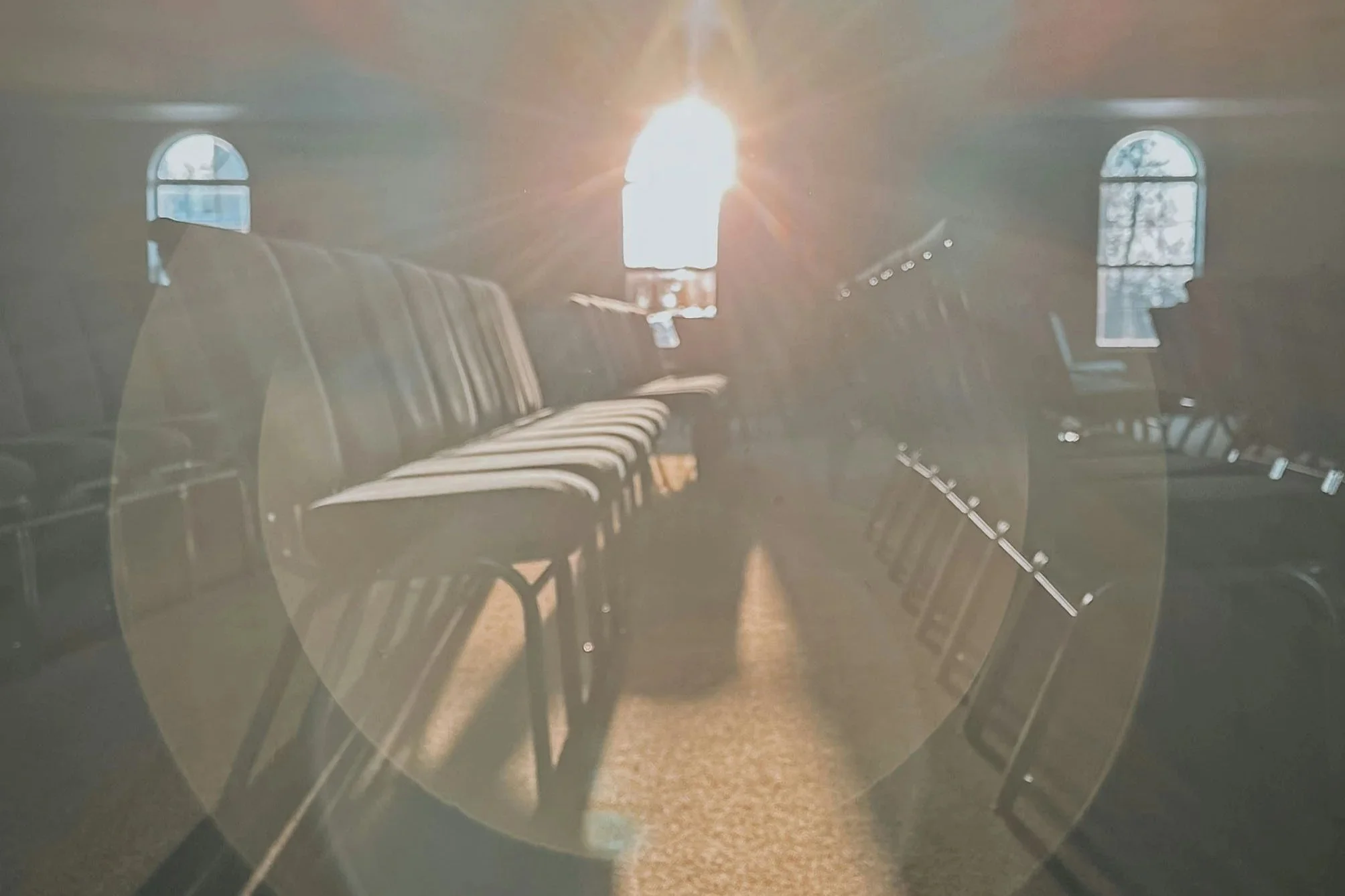
Photo by Beverly Kimi on Unsplash
As a young adult and a pastor's kid, I have seen how churches are working hard to welcome people who have felt excluded in the past. I want to call our attention to a particular marginalized group: individuals with autism.
As an individual diagnosed as being on the autism spectrum with ADHD (or in more colloquial terms – AuDHD) and growing up as a pastor’s child, I had to grasp quickly how to do high-level masking in worship spaces. My body was always tired from being around so many people and having to be social for over an hour. During services, I would lay in the back with my mom, either laying on her shoulder to rest or laying on my side in the pews. Loud sermons and songs were a struggle for me, especially if it was not something that interested me. Some sermons I wanted to clap for, and I learned that clapping for sermons is NOT how we tell someone in the Lutheran church that they did a good job. Now as an adult, I’ve decided to clap for them anyways, but as a tiny golf clap so as to not draw attention to myself.
What I’m trading to ease my deep discomfort is my ability to be present and attentive to worship, the sermon, and my relationship with God.
In fact, most things I would do in worship services to stay regulated are not deemed as socially appropriate (or rather, this is something I had to learn). I no longer can sleep in the pews if I’m having a particularly burnt out day or close my eyes to block out the bright lights in the sanctuary space. The thing I struggle with most is all the noises. There are always people sniffling, coughing, sneezing, dealing with general ailments and tons of mic feedback on top of someone talking or singing. I deal with misophonia, which is a condition where specific sounds trigger strong negative emotional and physiological reactions. This condition is seen more in individuals with autism. A study done by the National Library of Medicine looks directly at the correlation between misophonia symptoms and autistic traits within a group of 445 participants. Results suggested those with misophonia display more autistic traits, as misophonia is a comorbid condition that tends to show up with neurodevelopmental disorders. What many people, along with the church, seem to not understand is that many of these conditions are comorbid (meaning they often occur together) and are capable of exacerbating already difficult circumstances.
In most worship settings, I have come to learn over time that my methods to cope with overstimulation is a social risk. What helps me (and many other people on the autism spectrum and/or with ADHD) stay focused and in-tune may come off to the congregation as disengaged, distracting, or even disrespectful. If I do not lay down, close my eyes, or rock back and forth, I somehow have to find an alternative, socially acceptable way to ignore the lights, the whispering, the out of tune piano, the itchy tag on my shirt I forgot to cut off, and the smell of the cologne of the man sitting next to me. For me, there isn’t a simple alternative. Often, I attempt to mask my discomfort by dissociating and building a world in my mind where I am safe and have space to be alone there. What I’m trading to ease my deep discomfort is my ability to be present and attentive to worship, the sermon, and my relationship with God.
It is important to open the conversation up to the experiences of neurodivergent people or professionals who work with both neurodivergent kids and adults to see what kind of accommodations work within each church's worship setting.
I frequently need to move to keep myself stimulated, and I have danced during catchy songs when I was younger. I always felt like I was simultaneously transported out of my body and fully present in my body when I would dance during worship. It felt like a meeting place for God and I to jam to beautiful music. I experience the holy spirit with physical sensation. I notice it when I feel chills, my hair stands up out of nowhere, feeling something physically move through me and making it easier for my lungs to expand, so it only feels natural for me to convey my praise and love for God as an outward expression. Sadly, it has been quite a while since I’ve had that feeling, since as an adult, I feel that it is no longer appropriate for me to do that in a worship setting. I now limit my dancing to a sway here-and-there.
When I enter a new worship space, I always keep my eye out and gauge responses to see how the congregation reacts to those who experience both understimulation and overstimulation. For example, I had gone on a tour of a church and came across a large area in the sanctuary dedicated to those who cannot sit still and needed their own space to move to keep engaged. I quickly realized it had been intended for kids. It felt like the church had thought that kids are the only demographic of humans that need a space like that. The unspoken message was, It’s okay if kids do it, but adults must hold themselves to a higher standard. All humans need space and room to move, so why do we act like the standard should be smooshing everyone into hard wooden pews and making ourselves uncomfortable?
Because autism is a spectrum, sensory-related triggers vary from person-to-person. Since mine are more extreme with auditory triggers, I may be more likely to struggle in public places like that of a worship space. Other individuals might have visual triggers, where bright lights (either stained glass or artificial) become overwhelming. Some individuals on the autism spectrum are touch-averse, which turns something as common and seemingly simple as passing the peace into a time of intense sensations and incredible discomfort, even physical pain. Beyond that, the overstimulation of all the moving pieces in a big sanctuary can amplify all the other triggers. I cope by dissociating, while some may experience a meltdown. It is important to open the conversation up to the experiences of neurodivergent people or professionals who work with both neurodivergent kids and adults to see what kind of accommodations work within each church's worship setting. This is likely to make some congregants uncomfortable because of changes in worship, but allowing for someone else to thrive and to cope healthily in the environment they are in is more important.
Worship should not be a draining and painful experience for those seeking a relationship with God. Many neurodivergent individuals will act out their faith alone or in the privacy of their home. The way most worship spaces are set up to have people engage in the service and all the underlying rules that come with it is not welcoming towards those who deal with sensory issues or do not pick up easily on unspoken rules. To be honest, a church with unspoken rules is not a church who welcomes all. It is already exclusionary from the onset.
To help churches accommodate the needs of those on the spectrum as well as all those with sensory issues, the first step is illustrating the issue that needs accommodating. My hope is that this blog post aided church leaders in understanding a perspective (while limited by my experience) on neurodivergence in worship settings, showing that there is a clear need to better welcome people like me. Once church leaders have had the opportunity to recognize our unmet needs, I believe the second step is to explore some ideas and methods to be more welcoming to those with different sensory needs. In this two-part series investigating sensory issues in the worship setting, I will do just that in hopes of creating new opportunities and avenues for experiencing worship.