Psalm 88 and the God Who Meets Us in the Dark
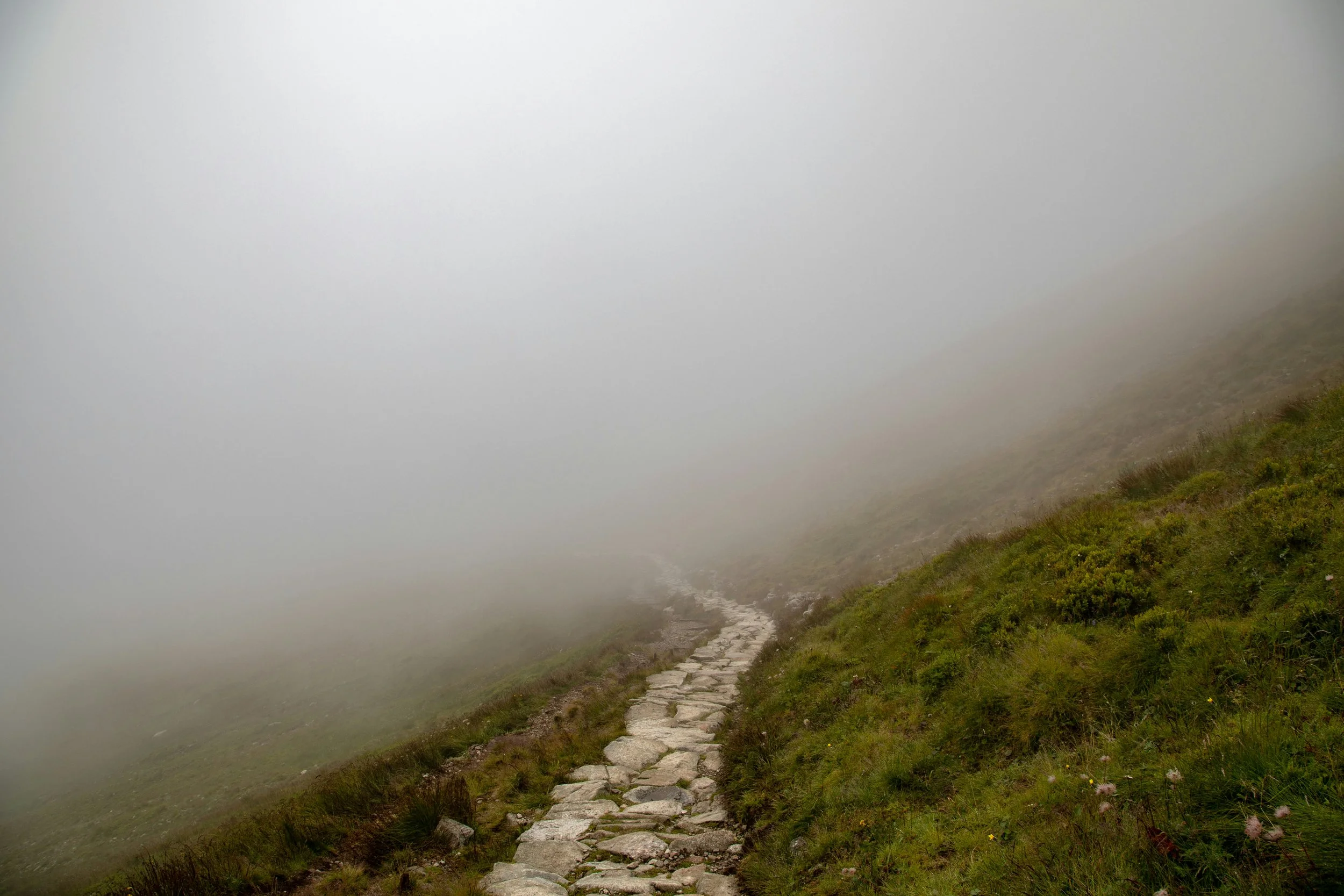
Photo by Katja Anokhina on Unsplash
LORD, you are the God who saves me;
day and night I cry out to you.
May my prayer come before you;
turn your ear to my cry.
I am overwhelmed with troubles
and my life draws near to death.
I am counted among those who go down to the pit;
I am like one without strength.
I am set apart with the dead,
like the slain who lie in the grave,
whom you remember no more,
who are cut off from your care.
You have put me in the lowest pit,
in the darkest depths.
Your wrath lies heavily on me;
you have overwhelmed me with all your waves.
You have taken from me my closest friends
and have made me repulsive to them.
I am confined and cannot escape;
my eyes are dim with grief.
I call to you, LORD, every day;
I spread out my hands to you.
Do you show your wonders to the dead?
Do their spirits rise up and praise you?
Is your love declared in the grave,
your faithfulness in Destruction?
Are your wonders known in the place of darkness,
or your righteous deeds in the land of oblivion?
But I cry to you for help, LORD;
in the morning my prayer comes before you.
Why, LORD, do you reject me
and hide your face from me?
From my youth I have suffered and been close to death;
I have borne your terrors and am in despair.
Your wrath has swept over me;
your terrors have destroyed me.
All day long they surround me like a flood;
they have completely engulfed me.
You have taken from me friend and neighbor—
darkness is my closest friend.
Psalm 88 has always struck me as the psalm that forgot to refill its antidepressants.
The psalms usually move from trouble toward trust, but this one never does—
it starts in pain, and it stays in pain.
No softening. No hopeful turn. No “Yet will I praise you.”
Instead, it ends with a sentence no one has ever cross-stitched onto a pillow:
“Darkness is my closest friend.”
And yet… the ancient community kept this psalm.
They copied it. Prayed it. Sang it. Preserved it as Scripture.
Why?
Because Psalm 88 tells the truth about certain hours of human life—hours when God does not feel close, or comforting, or even particularly concerned. It tells the truth about the nights when faith is not bright or confident, but feels small and unsure.
This psalm names the hiddenness of God—the God who shows up in ways that feel like the opposite of what we expected.
Psalm 88 is not a detour from faith; it is faith.
The psalmist is not turning away from God—he is turning toward God in the only way he can: with a raw, unfiltered cry.
Sometimes the prayer of faith is not “Thank you, Lord,” but:
“Where are you, Lord?”
Sometimes the only worship we can manage is the kind that sounds like complaint. Luther even argued that lament and protest are deeper forms of faith than polite, empty piety—because only someone who trusts God is listening bothers to shout into the void.
The psalmist says,
“I cry out to you day and night.”
“In the morning my prayer comes before you.”
Psalm 88 teaches something at the heart of faith:
Sometimes the holiest thing you can do is keep talking to God when you don’t feel God talking back.
So let’s not clean the psalm up.
Let’s not rush to rescue it.
It won’t let us.
The psalmist feels entombed while still breathing—cut off, abandoned by God and friends alike. And if we’re honest—brutally honest—many of us know exactly what that feels like. Not the “someone took my parking spot” kind of hardship, but the kind that rearranges your bones.
As a physician, I have witnessed a great deal of human suffering.
I have heard the painful cries of a mother who has lost her child.
I have seen a sister brush her brother’s hair one last time, her hands trembling with the weight of what she could not change.
I have watched injuries and illnesses overturn people’s lives in an instant.
Just a few weeks ago, I treated a middle-aged man with chest pain—strong, stoic, the kind of guy who apologizes for bleeding.
But while we waited for his labs, he suddenly broke down into deep, chest-heaving sobs. Between breaths he told me his wife had died two months earlier.
He’d been sleeping in her recliner because their bed felt like a betrayal. He hadn’t prayed since the funeral because he felt God had left him in the room with the lights off.
“Doc,” he said, “I’m not afraid of dying.
I’m afraid I’ll never feel anything again.”
He didn’t need my medical expertise in that moment.
He needed permission to say what Psalm 88 shouts from the rafters:
“This hurts more than I can bear.
I don’t see God’s hand reaching out, and I’m drowning here.”
This is the very ground Psalm 88 was written on.
But here is what we often overlook:
Psalm 88’s despair is actually its deepest confession of faith.
Notice something easily missed in this psalm:
It never stops praying.
The psalmist says,
“I cry out to you day and night.”
“In the morning my prayer comes before you.”
Psalm 88 teaches something at the heart of faith:
Sometimes the holiest thing you can do is keep talking to God when you don’t feel God talking back.
This is not weak faith.
This is not defective faith.
This is cruciform faith—faith shaped like the cross, faith that lives where Jesus lived: in the darkness between “My God, my God” and “It is finished.”
Luther insisted that God’s most profound work happens under the opposite of its appearance:
strength hidden under weakness,
glory hidden under suffering,
love hidden under what feels like abandonment.
Psalm 88 is not evidence of God’s absence;
it reveals where God chooses to meet us—
and sometimes that’s in the valley, not on the mountaintop.
Suffering forms us, not because it is good, but because God refuses to waste it.
In the early 90s, scientists in Arizona conducted the Biosphere 2 experiment, creating a sealed environment meant to replicate life in space—a world without wind. They discovered that trees could not mature; they grew until they fell over. Without wind, trees could not develop what’s called “stress wood,” the deep root strength that allows them to survive.
Human beings are the same.
Our roots grow in weather, not in climate control.
And Psalm 88 reminds us that God does not remove the wind—
but God stands beside us in the storm.
Not because pain is holy, but because Christ refuses to leave us alone in our suffering. Like my patient who eventually said,
“I still don’t feel God… but I think God feels me.”
Psalm 88 ends in darkness, but Scripture does not.
Here is the good news:
Our hope does not come from our ability to climb to God.
Our hope comes from the God who joins us in our valleys.
Jesus does not wait until Easter morning to meet us.
He descends first—into death, into hell, into a psalm like this that ends without resolution.
This is the Gospel:
God’s love reaches deeper than our despair.
Even when we cannot see it.
Even when we cannot feel it.
Even when our prayer is just a tear.
Paul puts it this way in Romans 5:
“Suffering produces perseverance, perseverance character, character hope—
and hope does not put us to shame.”
Why?
Because that hope is not our achievement.
It is something poured into us—grace that is given, not earned.
Psalm 88 leaves us in the dark.
But the God of the cross does God’s best work in the dark.
When we grieve, God is there.
When we doubt, God is there.
When we shout at heaven, God is there—listening, receiving, holding, and shaping.
Our suffering does not scare God.
Our honesty does not offend God.
Our darkness does not dim God.
My prayer—the prayer Psalm 88 dares us to pray—is this:
that we may have the courage to speak truthfully in our darkest nights,
to cling to God even when God feels far,
and to trust—somewhere deep beneath the ache—
that the darkness is not our closest friend.
Our closest friend is Christ.