Empire in the Everglades: Prophetic Imagination in the Face of “Alligator Alcatraz”
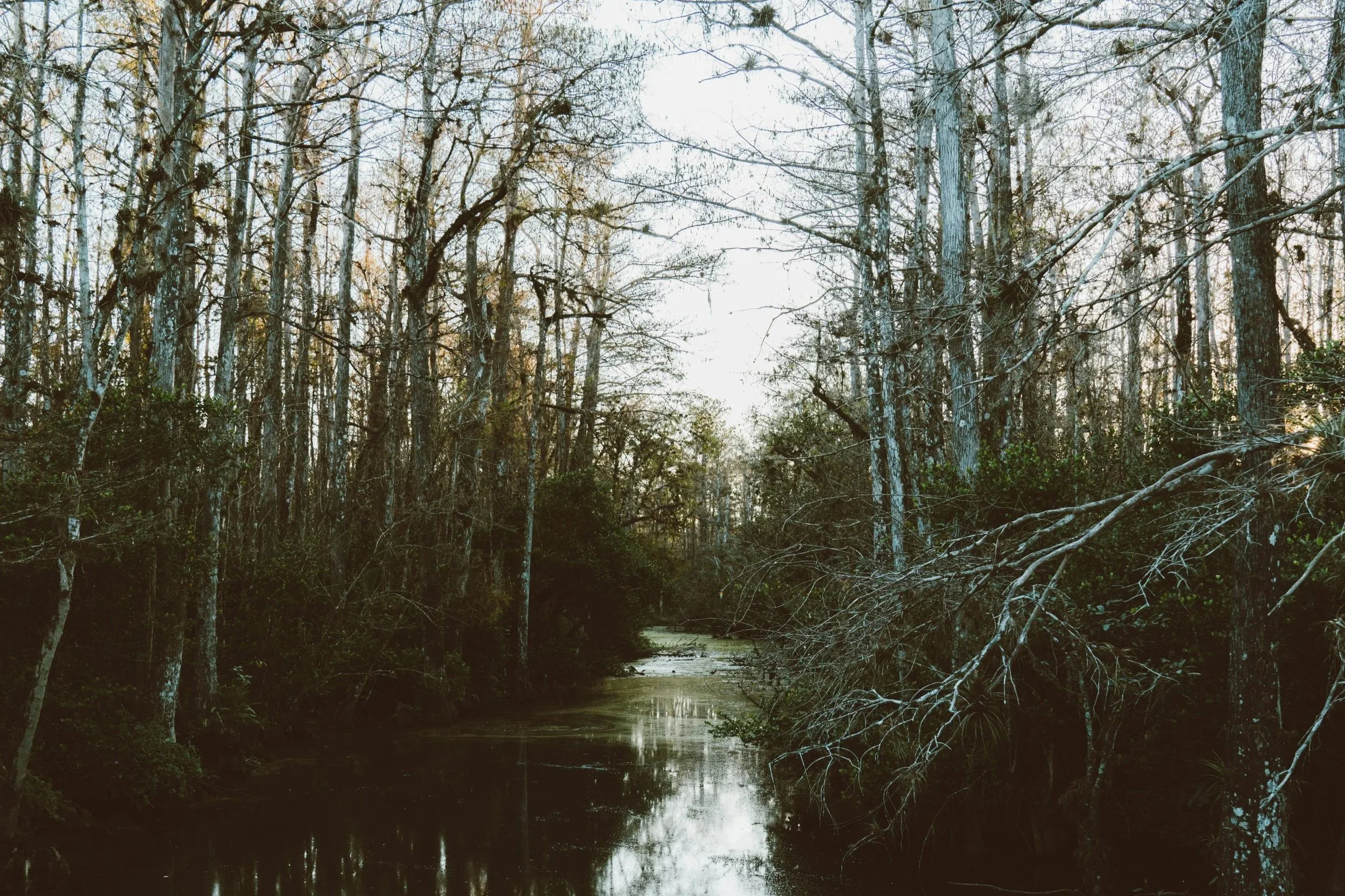
Photo by Tobias Faucher on Unsplash
One of my childhood homes—and the home where my parents still live—sits just miles from the edge of the Everglades, west of what Miami locals affectionately call la sagüesera. During college, I often biked Shark Valley, the 15-mile loop that winds through the heart of Everglades National Park, where egrets dipped into still waters and gators lazily crossed our path. We’d swerve to avoid them, half-laughing, half-holding our breath—mystified and terrified, but always in awe. It was their home, after all. The swamp pulsed with life, wild, unpredictable, and full of memory.
Not far from that trail, in this same fragile and sacred ecosystem, the DeSantis administration is constructing what many have rightly called a concentration camp—a detention site for immigrants that Trump has promised will hold “some of the most vicious people on the planet.” The facts, of course, betray that lie: a significant number of those detainees have no criminal record at all. Of those who do, many are charged with traffic violations or illegal re-entry—hardly crimes that justify this level of carceral brutality.
The site has already been dubbed Alligator Alcatraz, an eerie nickname that masks the horror of what’s unfolding. In the Florida heat, on blistering tarmac in a storm-prone ecosystem, bodies are being caged—without trial, without rights, without due process. This facility isn’t built for justice, but for control. These are sites of fear, where governments target the vulnerable—often based solely on identity, race, migration status, or perceived threat. They are tools of empire, designed to dehumanize, to erase, to terrorize.
But empire does not know how to sing. It doesn’t understand restoration—only extraction. Empire doesn’t plant; it paves. It doesn’t listen; it silences. It razes both people and land because it sees both as disposable. And where it cannot dominate, it destroys.
And empire, we must remember, never wounds in isolation.
This site is embedded in one of the world’s most delicate and endangered ecosystems. The irony is almost unbearable: while the federal and state government have poured billions into restoring the Everglades—a landscape once decimated by colonization and development—they are now spending millions to build a carceral complex that will undoubtedly do further damage to the very land they claim to be saving.
This tension—between restoration and destruction—is at the heart of the Everglades’ story. Once drained for agriculture, sliced up for sugarcane production and cattle grazing, and dismissed as useless swampland, the Everglades nearly collapsed under the weight of human greed. But in 2000, something extraordinary began: the Comprehensive Everglades Restoration Plan. A bipartisan commitment to healing the land. A rare political act of humility.
Since then, the “river of grass” has slowly come back to life. The Kissimmee River, once mutilated into a straight ditch, now winds again—its curves restored, its wetlands reborn. Twenty-five thousand acres of floodplain breathe once more, as ibises and herons return to their ancestral habitat. The water flows. The soil heals. The land sings.
But empire does not know how to sing. It doesn’t understand restoration—only extraction. Empire doesn’t plant; it paves. It doesn’t listen; it silences. It razes both people and land because it sees both as disposable. And where it cannot dominate, it destroys.
Long before the Everglades became a site of scientific wonder or environmental debate, it was home to the Calusa and Tequesta peoples. They navigated the watery labyrinth with skill and reverence, building canals, tending to ecosystems, and living in deep kinship with the land. For them, the swamp was not an obstacle—it was a relative. But European colonizers arrived with a vision of conquest. They brought disease, violence, and a theology of supremacy that saw the land as wild and the people as savage. In their attempt to tame the land, they severed relationships that had sustained life for generations. And in draining the wetlands, they drained stories, languages, and lives.
But the Everglades resists. So do the Seminole and Miccosukee peoples, whose continued presence and advocacy are testaments to the power of survival. Restoration, here, is not just about ecosystems. It’s about truth-telling and honoring memory. It’s about resisting the forces that would rather us forget, and about standing against an ideology of destruction that degrades and depletes both soul and soil. Because this is how empire works: it bulldozes, then it buries. It destroys, then it denies. And if we are not vigilant, we will find ourselves complicit in a story where cages are built in swamps and the soil is expected to stay silent.
The Bible gives us language for this. The Babylonian exile was more than a political crisis—it was a catastrophe that shattered both people and land. When Jerusalem fell, trees were burned, fields scorched, and groves laid waste. “How long will the land mourn, and the grass of every field wither?” the prophet lamented (Jeremiah 12:4), voicing the groans of a creation ravaged by imperial violence. The people, too, were devastated—torn from their homes, their bodies exiled, their songs silenced in foreign places. Because this is how empire works; it sees land as territory to be conquered and people as labor to be exploited. The violence of the exile was total: it tore flesh and it tore roots.
No decree of empire can erase the divine image etched into a people—or the sacredness of the land that holds them.
Yet in the prophetic imagination, both people and land awaited redemption together. The earth, bearing the weight of injustice, also longed to be made whole: “The wilderness and the dry land shall be glad; the desert shall rejoice and blossom… they shall see the glory of the Lord” (Isaiah 35:1–2). Even in ruin, the vision of restoration remained. Healing would come—for both the displaced and for the soil beneath their feet. Because land is never just land. Like us, it remembers. It groans when wounded. It rejoices when restored.
From within the rubble, the prophets cast a vision of return: of vineyards replanted, ruins rebuilt, and weeping turning into dancing. They remind us that dignity cannot be legislated away. No decree of empire can erase the divine image etched into a people—or the sacredness of the land that holds them.
The prophets offer us a glimpse of what could be, but visions are not guarantees. They demand something of us. Memory alone is not enough. If the land remembers—and the people do too—then what do we make of this modern fortress rising from sacred soil, built to cage and forget? As history threatens to repeat itself, we must ask: how will we respond? Will we meet the dehumanization unfolding before us with silence or with resistance? Will we turn away, or will we confront tyranny head-on?
Already, a coalition of humanitarian and environmental groups is suing Governor DeSantis, arguing that this facility violates both human rights and environmental protections. Their resistance reminds us that the fight for justice is not abstract. It is legal, embodied, organized. It’s a fight being waged in courtrooms and communities alike—a fight for the dignity of both the earth and those who dwell upon it.
And justice begins by telling the truth, by naming what’s happening just miles from where families ride bikes in the swamp: a state-sanctioned concentration camp built on sacred ground. It looks like honoring the ancestors who walked gently with this land, and heeding the Indigenous voices still laboring for its renewal—and for the thriving of the people bound to it. It looks like recognizing that the restoration of ecosystems and the restoration of human dignity are not separate struggles, but intertwined. Because when the land is wounded, it is often the most marginalized and vulnerable among us who bleed with it.
We live in a world where the Everglades can bloom again and still be a site of new violence. Where rivers are revived, and people are imprisoned. We cannot behold this dissonance and remain unchanged. It calls us to live differently—to hold grief and hope in the same breath, to dig our heels into the soil and refuse to let empire have the final word over land or over lives, to commit to conservation and to liberation.
Because the land does not forget. And neither do the people. Together, we can reclaim what empire tries to erase.