When Empire Rewrites the Story
On Wednesday morning, January 7—the day after Epiphany—ICE agent Jonathan Ross shot and killed Renee Good on a residential street in Minneapolis, Minnesota. By nightfall, our screens were flooded with video stills, slowed-down clips, and hot takes. Before the shock could settle into grief, we were pushed into semantics and technicalities, debates about who crossed which invisible line first.
That reflex alone should trouble us. The fact that we, as a collective community, are still slow-motion dissecting the videos of her murder—still parsing moral worthiness, still asking whether Renee met the threshold of deserving to live—reveals how profoundly disfigured our moral imagination has become.
Epiphany, in the Christian tradition, is about revelation. It is the season when hidden things are made visible. The Magi see what Herod cannot—or will not: that God’s presence does not align with imperial power, violence, or control. And Herod, threatened by this revelation, responds the way empire always does: with fear, force, and bloodshed. Epiphany exposes not only who God is, but who empire is when it feels its grip slipping.
This is how empire survives: not only through force, but through story. By erasing violence, sanctifying power, and demanding that the wounded doubt their own testimony.
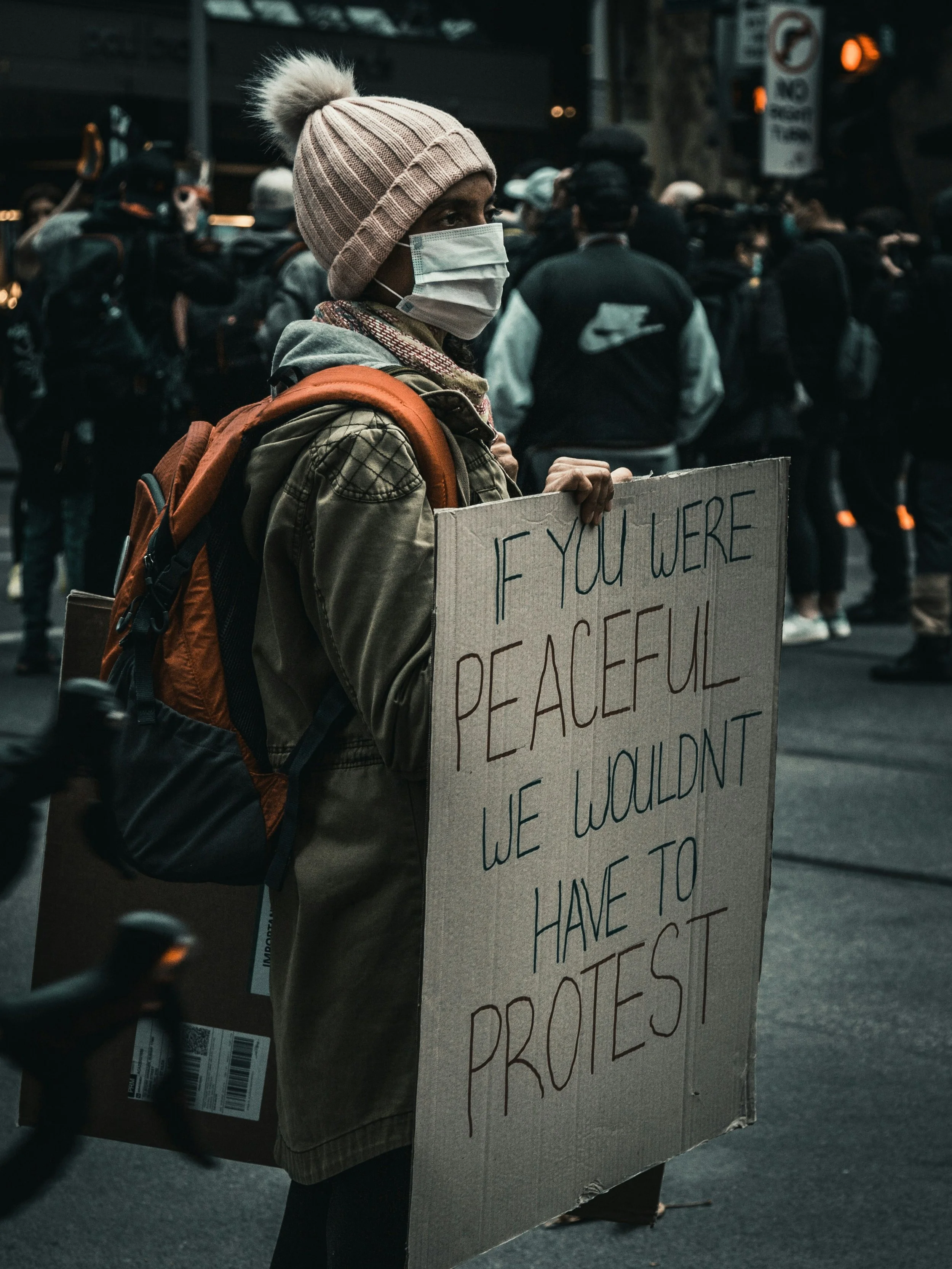
After Renee’s killing, many rushed to frame what happened in legalistic terms. Some insisted she was “breaking the law” by allegedly “obstructing” ICE, or that placing her car in the path of a federal raid and bearing witness with her partner—who was recording the events—somehow made her culpable. We need to be clear: there is nothing inherently illegal about being a legal observer of government action, nor is there anything illegal about peaceful protest. Both are constitutionally protected rights.
Throughout history, movements for justice have required people to place their bodies between violence and the vulnerable: sit-ins, locked arms, standing in doorways, blocking roads. Presence itself has long been a form of resistance. And in our time, video has often been the only mechanism of accountability. The racial justice reckonings of 2020 would not have happened without ordinary people filming what authorities had long been able to deny—most notably the police murder of George Floyd, killed less than a mile from where Renee would later lose her life. Minneapolis knows, perhaps more than most cities, that bearing witness is not provocation. It is often the last defense against erasure. None of this is criminality.
A woman witnessed her friends and neighbors being terrorized by agents of the state, and she did what so many of us say we would do. She intervened. She tried to do something, anything, and she was killed for it.
She was killed by masked, armed agents from an institution that has spent months detaining people without warrants, without clear identification, without meaningful accountability. ICE insists its mission is public safety. But this incident reflects excessive, disproportionate, and deadly force against an unarmed civilian. It is difficult—if not impossible—to reconcile that with any credible definition of “keeping people safe.” After the shooting, a doctor can be heard on video pleading with agents to allow medical care. The agents refuse. This is not the posture of people primarily concerned with preserving life.
In the Epiphany story, the Magi protect life by defying Herod. Here, the agents of the state deny care and leave a woman to die alone. Revelation cuts both ways. It comforts the vulnerable and indicts the powerful. It saves some and judges others—not because God changes, but because people respond differently when the truth is made visible.
You cannot unleash chaos on communities, terrorize people in broad daylight, and then claim innocence when fear and resistance follow. You do not get to be both the author of violence and its victim. Herod slaughtered children and still called himself king. Empire has never lacked for self-justification.
ICE has been abducting people from sidewalks and parking lots for months. That reality does not disappear because it is politically inconvenient. And if we cannot name this plainly—if we cannot grieve honestly, speak truthfully, and refuse the lies offered to us—then the danger is not only what has happened, but what we are allowing ourselves to become.
What followed after Renee’s murder matters as much as the killing itself. Federal leaders labeled her a “domestic terrorist” and blamed “the radical left.” Leaders of this country justified the killing of an innocent civilian—without empathy, without remorse—by reframing the exercise of constitutional rights as terrorism. This is how tyranny takes root: by retelling the story until violence sounds reasonable and the innocent are made responsible for their own deaths.
Empire has always been skilled at crafting narrative. Rome called crucifixion “peacekeeping,” public terror a necessary tool for order. The gospel writers knew this, which is why they insisted on telling the story Rome wanted buried. And it remains true today. This is how empire survives: not only through force, but through story. By erasing violence, sanctifying power, and demanding that the wounded doubt their own testimony.
The day before Renee’s murder was the five-year anniversary of the January 6 insurrection when a violent mob scaled walls, carried crosses and erected nooses, assaulted security officers with bats and poles, and violently broke into the seat of government while elected officials barricaded themselves and fled for their lives. They ransacked offices, stole confidential government materials, and openly attempted to stop the peaceful transfer of power.
And then empire did what empire always does: it rewrote the story.
What we all witnessed has been minimized, distorted, or denied. The violence reframed as ordinary protest; the perpetrators recast as patriots, many later pardoned. And a few years later, the outgoing administration would be restored to power without repercussions, as though unleashing one of the gravest threats to democratic governance in modern U.S. history were a minor political misstep.
Like the gospel writers, the prophets too refused empire’s edited version of events and told the truth power wanted forgotten. Isaiah warns, “Woe to those who call evil good and good evil” (Isaiah 5:20). Here, Isaiah is delivering a courtroom indictment against leaders—rulers, judges, landowners, and religious authorities—who survive by renaming injustice, who build their thrones on forgetting, and whose fragile peace depends on our silence. The “woe” is a warning. If you keep reading, the end of this path was exile: social unraveling, leaders stripped of legitimacy, and a people consumed by the very myths they chose to believe.
This is why telling the truth matters. If we do not, we will keep finding ourselves on the wrong side of history. Epiphany is not merely about light appearing. It is about lies being stripped of their disguises. Epiphany demands that we see clearly—and once we see, we are responsible for what we do with the light.