When Grief Becomes Protest: Rizpah in the Streets of Argentina
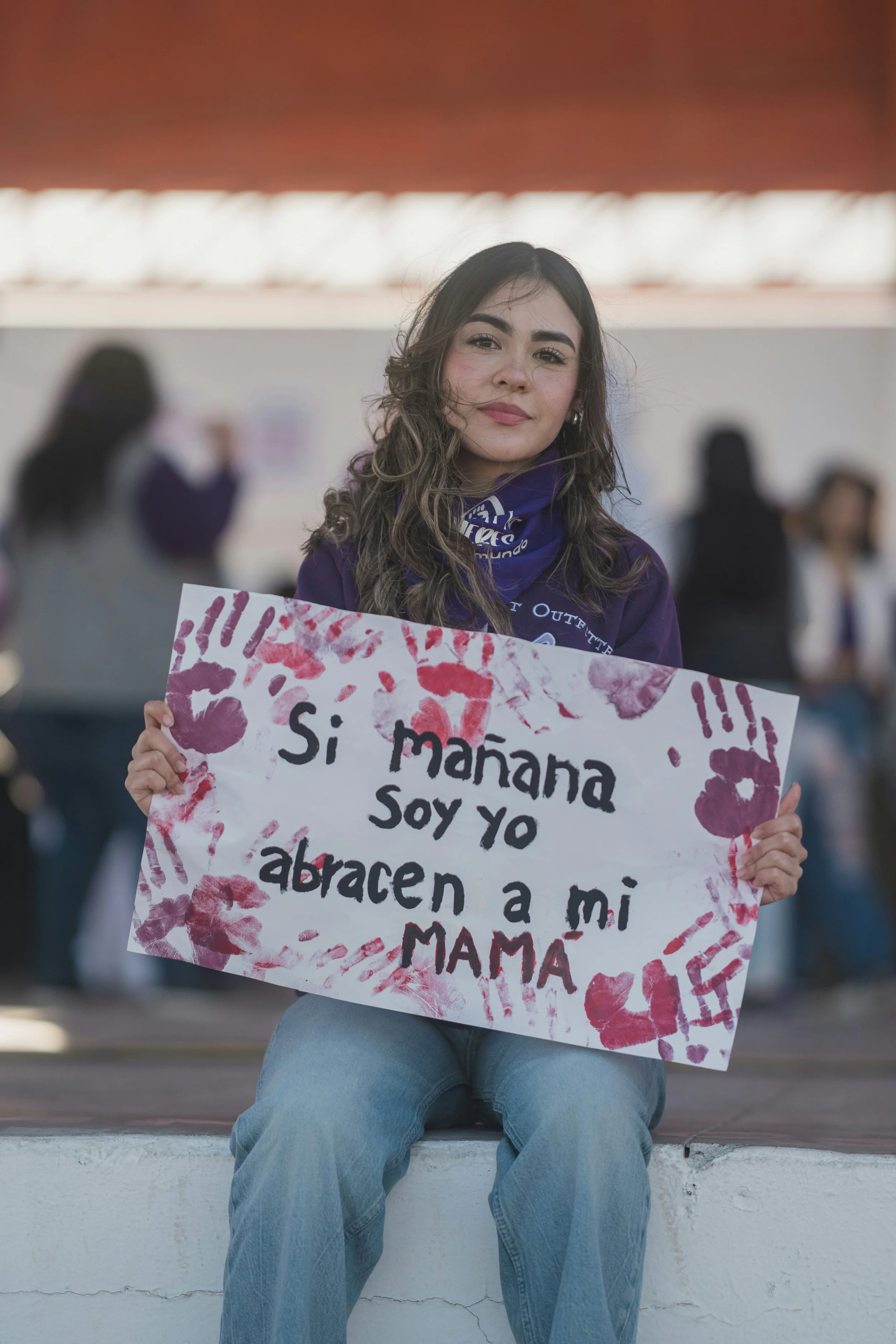
Photo by Hector Reyes on Unsplash
It’s Latino Heritage Month and ICE is terrorizing the people of Chicago in its most recent targeting. Early Tuesday morning, nearly 300 federal agents descended on a South Side apartment complex. Using drones, helicopters, trucks, and dozens of vehicles, agents surrounded the building in the middle of the night. Snipers rappelled from helicopters onto the roof. As of this week, more than 900 arrests have been reported. But DHS and ICE have offered few details, making it nearly impossible to confirm alleged crimes or even the identities of those detained. People are being pulled off the streets and vanished into the system.
It’s Latino Heritage Month, and hundreds of detainees at “Alligator Alcatraz” are missing. Four hundred and fifty souls disappeared, their names erased from the system, some deported to countries they have never even lived in. Families call detention centers only to be met with silence.
Disappearance has always been part of empire’s playbook: the vanishing of bodies, the erasure of names, the silencing of memory. It was true in Argentina in 1976, when the military toppled the presidency of Isabel Perón and installed a junta as part of a larger series of political coups called Operation Condor, a campaign sponsored and supported by the US that sought to stamp out dissent in Latin America. The new military dictatorship launched what became the Dirty War, which was a war not against armed enemies, but against the Argentinean people.
She could not resurrect her children, but she could resist their erasure.
State-sponsored terror became daily life. Anyone labeled “subversive” by the regime could be targeted—most often young students, doctors, sociologists—anyone involved in activism or social projects that included human rights programs. The government labeled them Marxists. One young doctor had been tagged a “subversive” for offering medical help to the poor in Tucumán.
Over 30,000 men, women, and children were kidnapped by police and soldiers, sometimes in uniform, sometimes in plain clothes. Those taken vanished into clandestine torture centers and concentration camps. Most were killed and raped. Children were taken and trafficked.
But in the face of this terror, a group of mamás and abuelitas did what seemed impossible. They gathered in the Plaza de Mayo, the very heart of Buenos Aires, where political power resided. They had tried everything—filing police reports, begging for answers, knocking on doors. Nothing but silence. So every Thursday they walked the plaza in circles, photographs of their disappeared children pinned to their clothes. At first they were just fourteen of them.
The military tried to silence them. Soldiers arrested them, spread lies in the newspapers, tapped their phones. Some of the mothers were even kidnapped themselves. But instead of shrinking, the movement grew. One leader, Azucena de Vincenti, was abducted and killed—so the women said, then there will not be one Azucena, but thousands. And there were.
Soon the world began to take notice. Women from Europe, Canada, and beyond stood in solidarity, protesting outside embassies, sending funds, amplifying the mothers’ cries for justice. Grief had become protest. Memory had become resistance. What the dictatorship sought to bury was now front-page news.
The junta could not comprehend the power of a mother’s love or the courage of abuelitas who refused to forget. With each step in that plaza, they revealed empire’s greatest fear: not armed resistance but ordinary women, carrying photographs of their children, persisting in their resistance, refusing silence.
The Bible tells a similar story. In the days of King David, Israel endured a famine. For three years the land yielded nothing, and David sought God for the reason. The answer reached back generations: long before, Israel had sworn an oath in Joshua’s time to spare and protect the Gibeonites (Joshua 9). But Saul broke that covenant, attempting to annihilate them in his zeal for Israel. Because he shed innocent blood, the nation as a whole bore the consequences (2 Samuel 21:1-2). In desperation, David turned to vengeance. To appease the Gibeonites, he handed over seven of Saul’s descendants to be executed (2 Samuel 21:8-9). Among them were two sons of a woman named Rizpah. Their bodies were left hanging in the open air, rotting under the sun—exposed, humiliated, and unburied, a deep dishonor in Israelite custom.
But like the Madres of Argentina, Rizpah refused silence. She could not resurrect her children, but she could resist their erasure.
Rizpah is a woman history might have forgotten were it not for her defiance. She was a concubine of King Saul, a mother whose children were stripped from her by political vengeance, a widow left without protection or status. In the eyes of the powerful, she was expendable. Yet when her sons were executed and their bodies left abandoned, Rizpah refused to turn away. For six months she spread sackcloth on a rock and held vigil over their corpses—swatting away vultures by day, driving off wild beasts by night. Her watch was defiance, her grief protest. Rizpah could not resurrect her children, but she could bear witness. She could insist that their memory, and their dignity, not be devoured in silence.
It was not David’s political theatre, not his blood-for-blood logic that ended the famine. No, it was Rizpah’s resistance. Just as the mothers of Plaza de Mayo forced a nation to confront what it wanted to forget, Rizpah forced a king to see what he had tried to ignore. Only when David heard of her vigil and ordered the bodies to be buried properly, with honor, did the skies finally open. The famine broke not through vengeance, but through justice—only when wrongs were acknowledged and dignity was restored (2 Samuel 21:14).
The theme for this year’s Latino Heritage Month is “Collective Heritage: Honoring the Past, Inspiring the Future.” And so we remember. We remember that while our communities continue to be surveilled, detained, and disappeared, mothers still rise in resistance. Rizpah, like the madres and abuelitas of Argentina, reminds us that empire’s greatest fear is women who refuse to forget—who turn grief into protest and memory into justice.