“I Bind Unto Myself Today”: St. Patrick, Revisited
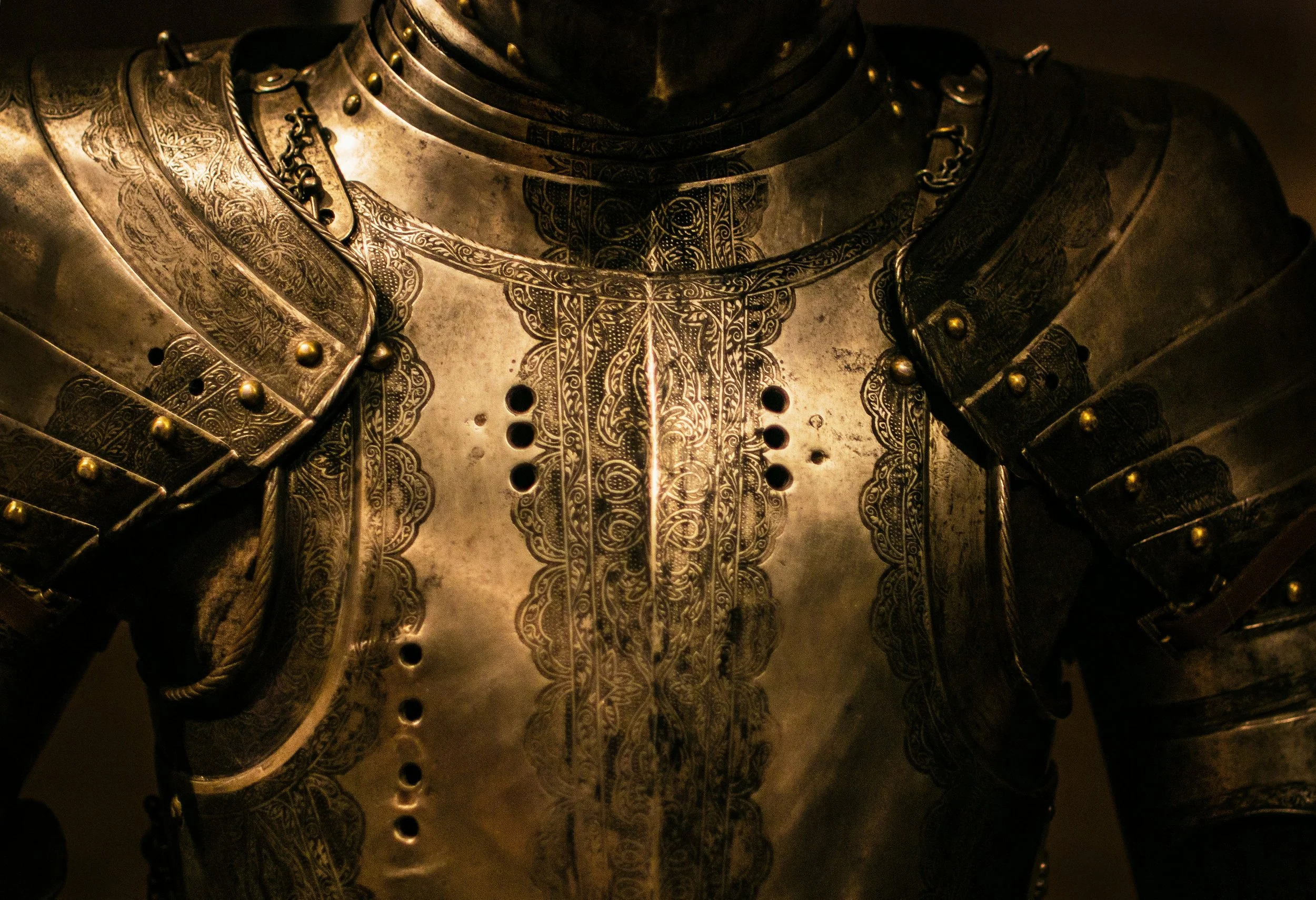
Photo by Nik Shuliahin on Unsplash
In a world going to war — at home, again, and in SWANA (Southwest Asia and North Africa) — it could feel crass to ask us to take up the armor of God. But I am not speaking of the armor that comes with clanging cymbals and America-first idolatries.
I am speaking of the tender breast of Ireland’s patron saint, Saint Patrick. Though famous more in this country for green-dyed rivers and a splitting hangover, Patrick is a saint revered for his generous sharing of the Gospel in Ireland. But he was not born in Ireland; he was born somewhere in present-day Great Britain.
Until he was kidnapped, as a child, and trafficked into slavery. While he was enslaved he began experiencing ecstatic visions and converted to Christianity. He eventually escaped — critical, I think, for us today to note his conversion did not make him meek to chains, but bound to know freedom more intimately. And returned home to Britain … only to eventually return and make his home in the land of his captivity, baptizing thousands of people, including with the explicit intent of finding his captors. Not to seek revenge. Not to obliterate them. Not to harm them.
“I bind unto myself today
the power of God to hold and lead,
his eye to watch, his might to stay,
his ear to hearken, to my need;”
To baptize them.
And, look: I know baptism has been used as a forcible means of Christian hegemonic power. But in a hermeneutic of generosity, I suspect Patrick wanted to baptize his former captors because he could see how the chains of enslavement bind even its purported victors into sin. Slavery binds even the “masters” into submission to evil. Slavery denies the God-bearing image inherent to all people; should you see in the eyes of the ones you oppress your own salvation, you might know you have no freedom at all.
And it is freedom that is the hinge on which all theology can turn from death to life. Patrick knew this, because while he was yet in chains, he came to know freedom. True freedom in Christ.
Freedom is not freedom to dominate, to overpower, to extract from people or earth all that you desire without consequence. Freedom is knowing Christ has set us free not to conquer the world or subdue it, but to love it. And yet we, who are not Christ, must constantly remember: the things we are scared of? Are actually scared of God.
Enter: the armor of God.
Riffing on Ephesians 6:10-18, many Celtic prayers took up an embodied practice of binding to themselves armor against spiritual enemies and of dedication to God. They would touch the different parts of their bodies named in the prayer as they prayed, linking a deep sense of who they were, and how they moved, and what their bodies needed into their spiritual ask of God.
This alone is worth pondering, because as I have said in my book, God Didn’t Make Us to Hate Us, the human body is not a divine problem. We do not have to conquer the body through spiritual sublimation, we honor the body as a gift from God, as a friend for life, however whole or disappointing she may be. And we honor that it is these shoulders and this heart and this brow and these lips that glorify God with our every breath, with our every kiss, with our every longing uttered aloud.
And Saint Patrick’s Breastplate, a prayer famously attributed to him, adorns the supplicant like so (an excerpt):
I bind unto myself today
the power of God to hold and lead,
his eye to watch, his might to stay,
his ear to hearken, to my need;
the wisdom of my God to teach,
his hand to guide, his shield to ward;
the word of God to give me speech,
his heavenly host to be my guard.
Christ be with me,
Christ within me,
Christ behind me,
Christ before me,
Christ beside me,
Christ to win me,
Christ to comfort and restore me.
Christ beneath me,
Christ above me,
Christ in quiet,
Christ in danger,
Christ in hearts of all that love me,
Christ in mouth of friend and stranger.
I bind unto myself today
the strong Name of the Trinity,
by invocation of the same,
the Three in One, and One in Three.
Of whom all nature hath creation,
eternal Father, Spirit, Word:
praise to the Lord of my salvation,
salvation is of Christ the Lord.
(Attributed to St. Patrick, translated by Cecil Alexander.)
I have long loved this prayer. But I think it has greater depth knowing St. Patrick’s story. I think of that sixteen-year-old, shivering and wondering where he was headed as his captors took him across the sea, when I hear the line Christ in hearts of all that love me. A prayer to not be forgotten. A longing for the hearth of home. I hear, too, the hope of the Good News for new converts and old enemies in: Christ in mouth of friend and stranger. A longing to live a life so drenched in adoration of God that the redemption and love of Christ is what people speak of when they speak of you. I hear the deep sense of knowing that only comes from having walked through anguish and known God in it: where you go, Christ is before, behind, beneath, and within you.
This is what it means to be clothed with the armor of God. It’s not battlements against the world; it is a shield against any doubt that says you aren’t good enough or lovely enough or wanted enough for God. Binding unto ourselves the strong name of God is literally dressing ourselves with the knowledge and faith that no matter what or who assail us, demoralizes us, hurts us, or threatens us — Christ will comfort and restore us, and the ones we love, and perhaps — miracle of miracles — our enemies, too.