Changing the Worship Space to Create Accessibility: Sensory Issues in the Worship Setting, Part 2
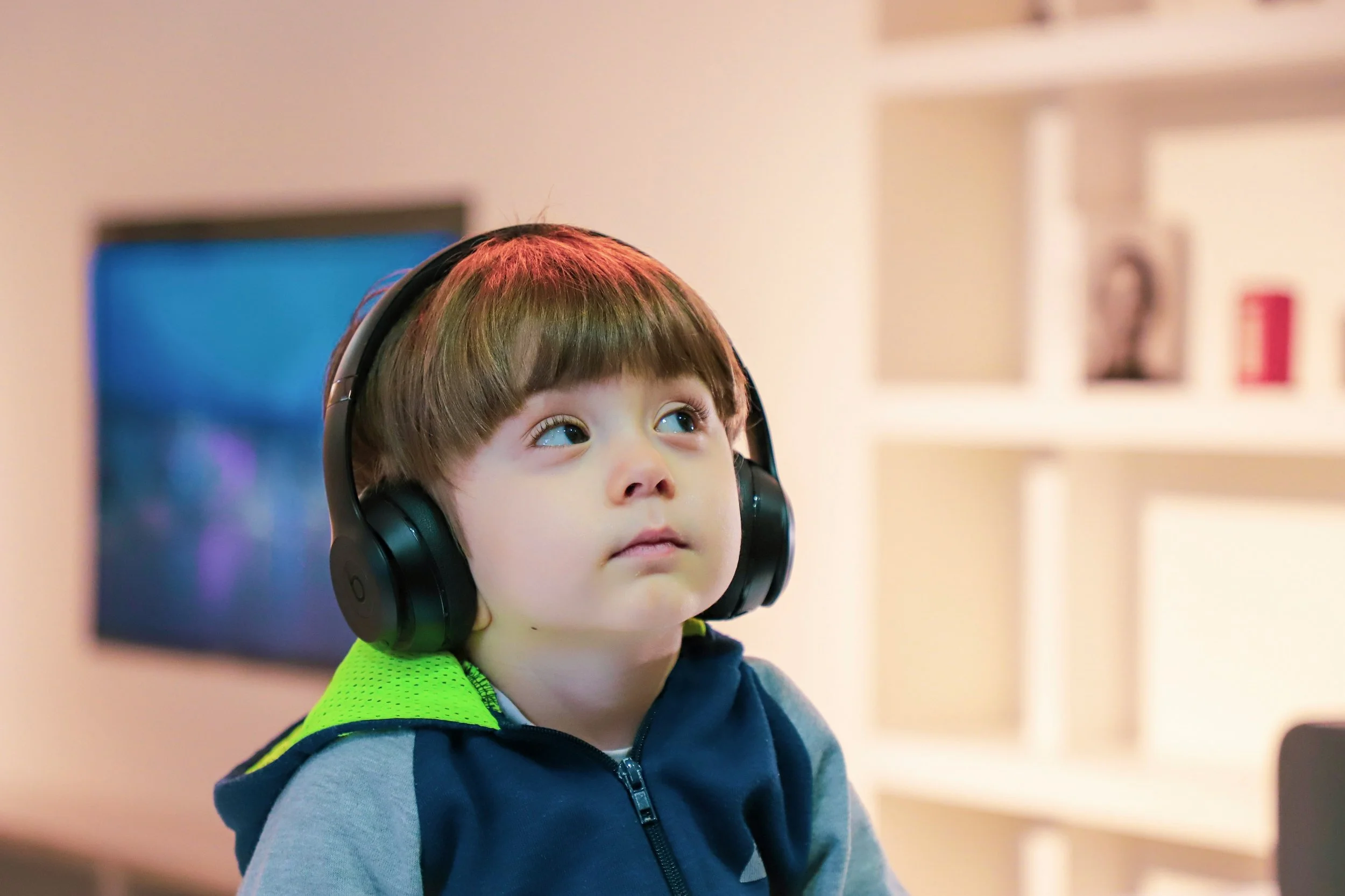
Photo by Alireza Attari on Unsplash
If you’ve read part one of this two part series on sensory issues in the worship setting, you’ll recall how pertinent it is to intentionally welcome those with sensory accommodation needs into worship spaces. The first thing I’d like to call out before doing so, is that I’ve done a lot more research into the terms “accommodation” and “disability” and how these things should be addressed in different settings. I agree with most of the things I said in my previous article, but I would like to grow upon some things first.
I’ve come to read just a small portion of a book, by Susan Wendell, called The Rejected Body. Wendell reframes the position, at which, to think about disability and what it means in reference to our Westernized society. She claims that “disability is socially constructed through the failure or unwillingness to create ability among people who do not fit the physical and mental profile of ‘paradigm’ citizens.” She goes on to explain that creating ability goes beyond accommodations. Creating ability also means being guided by those with disabilities to point out what about a space makes it disabling for them. In addition, creating ability means not making disability a private matter. The more we push those with disabilities into the private sphere of society, the more disability we create by failing to make the public sphere more accessible to a larger range of individuals.
This put a lot into a new perspective for me, where I’m trying to think about spaces (whether physical or social) being the thing that is disabling. Thinking of a space, rather than a physical or mental condition, as the disabling thing does not mean that people don’t struggle with lifetime conditions. What it does mean is that our society chooses to reject the cost of changing our spaces and our world for our own convenience, when we could be working with those with differently abled-bodies and brains to make the world less disabling for them.
I think this fairly applies to how the worship setting can be disabling for me as an individual with sensory issues stemming from autism and ADHD. We have not talked enough about the idea of disability and those we prescribe disability to as an issue. It has become a private issue in the church, even when you consider how little we talk about disability or physical or mental impairments in the church. The more we can talk about creating access, the more people like me can be enabled and not have to feel disabled in a space intended to bring me closer to God.
I call you to think deeply about whether your church is accommodating sensory issues in your worship and how to better accommodate those who deal with sensory overwhelm, as well as considering how else your church could open up their doors wider and prevent disabling those who wish to commune with others
Why has disability become a quiet and private issue? In part I believe it is because people fear disability, because they fear they will one day be disabled themselves or their family members. Those with disabilities are not to be feared. Autism is not to be feared. Disability, even if temporary, is incredibly likely within one given lifetime – especially considering how much we’ve lengthened our lifespan. According to Alsop Elder Law Advocacy Firm, it is a natural part of life, as 1 in 3 people will have experienced a disability before the age of 65. If you do not experience it yourself, you will definitely know someone who has experienced being disabled that is close to you. Beyond what might be considered a physical or mental disability, there are also many social factors that can lead to people having a disabled life. I would argue something as lethal as poverty is, indeed, disabling. Furthermore, as humans, we can very rarely control our circumstances.
Coming to accept and care for those who are disabled by how the world operates is part of this common calling to love our neighbor, because God made creation and God’s creation is good. If we are all made in the image of God, we have to care for those who might look like a God who is on the spectrum, a God with cerebral palsy, or a God with a speech impediment.
We also cannot make accessibility (or as Wendell says, create ability) only for a few token representatives. Work and research has to be done by the church as well. If all the work lays on the backs of those who need the space to change, it is further disabling, rather than lifting them up. We do not want to perpetuate the historical practice of believing the person and their condition is the problem when in reality, it usually is the built environment or the social organization of activities.
I call you to think deeply about whether your church is accommodating sensory issues in your worship and how to better accommodate those who deal with sensory overwhelm, as well as considering how else your church could open up their doors wider and prevent disabling those who wish to commune with others. Knowing that my individual experience is not encompassing of all sensory issues, I do have some suggestions about how the church (beyond remapping its understanding of disability) could create better accessibility for those dealing with sensory overwhelm.
There are a variety of options that can be implemented to make a more sensory friendly worship service:
Alternative seating. This might mean taking away some pews to make room for different kinds of seating, or to create excess space between the pew at the very back and the one in front of it.
Social scripts. These reduce anxiety by providing clear guidelines on how to navigate interactions. Yes – bulletins often do help in this way, but offering more clear instruction in terms of certain interactions in worship, we may take for granted, are immensely helpful. For example, what “giving peace” means with an associated graphic of two people shaking hands also with a non-contact alternative of holding up a peace sign to someone else helps an individual process exactly what action they need to do when “giving peace.”
Smooth transitions. Those with sensory issues have difficulty transitioning from one task to another. A method a church community could implement is building in a set transition period between each major section of the service. This could be aided by soothing, slow, soft music intended to help the mind resume its task.
One example of a church integrating multiple forms of sensory access is Cross of Peace Lutheran Church in Shakopee, Minnesota. Cross of Peace has a sensory and family friendly service on Sundays, which they say is “a service for people of all ages and abilities, including those on the autism spectrum and those with sensory sensitivities.” They encourage individuals to come to God in a relaxed environment as they are. They provide social scripts and visual cues in a shortened worship service, which aids those who need structure and have a shorter attention span. In addition, there are sensory friendly worship bags, which might have fidgets or other sensory tools to help individuals cope with overstimulation. On top of this, they offer alternative seating to help with fidgeting, including yoga balls–something I personally enjoy using for helping me focus on something by bouncing.
While these ideas mainly aim at those with sensory issues, all of these suggestions are methods I think would truly benefit a wide range of bodies and brains during church services to engage with the community and to have a strong relationship with God. Beyond space suggestions, having a church policy around attempting to provide changes to the space for better accessibility is necessary–especially acknowledging the ways in which public spaces like churches have disabled those already struggling further by making their services inaccessible. If your church is only accessible to some and not to others, that is not living into the calling of hospitality.
Providing better access and acknowledgment towards a community that has been privatized by society is the first step; the second is listening to the needs of that community and following through on promises. Once the church is able to start meeting a broader set of needs, the church needs to work towards not fearing those differently abled – not to see them as a warning of what you could be, but to see them and accept them as a variation on the living person. We ALL are variations of the human being. There is no normal, and the church should not expect that either.