What If Young People Actually Do Want To Go To Church?
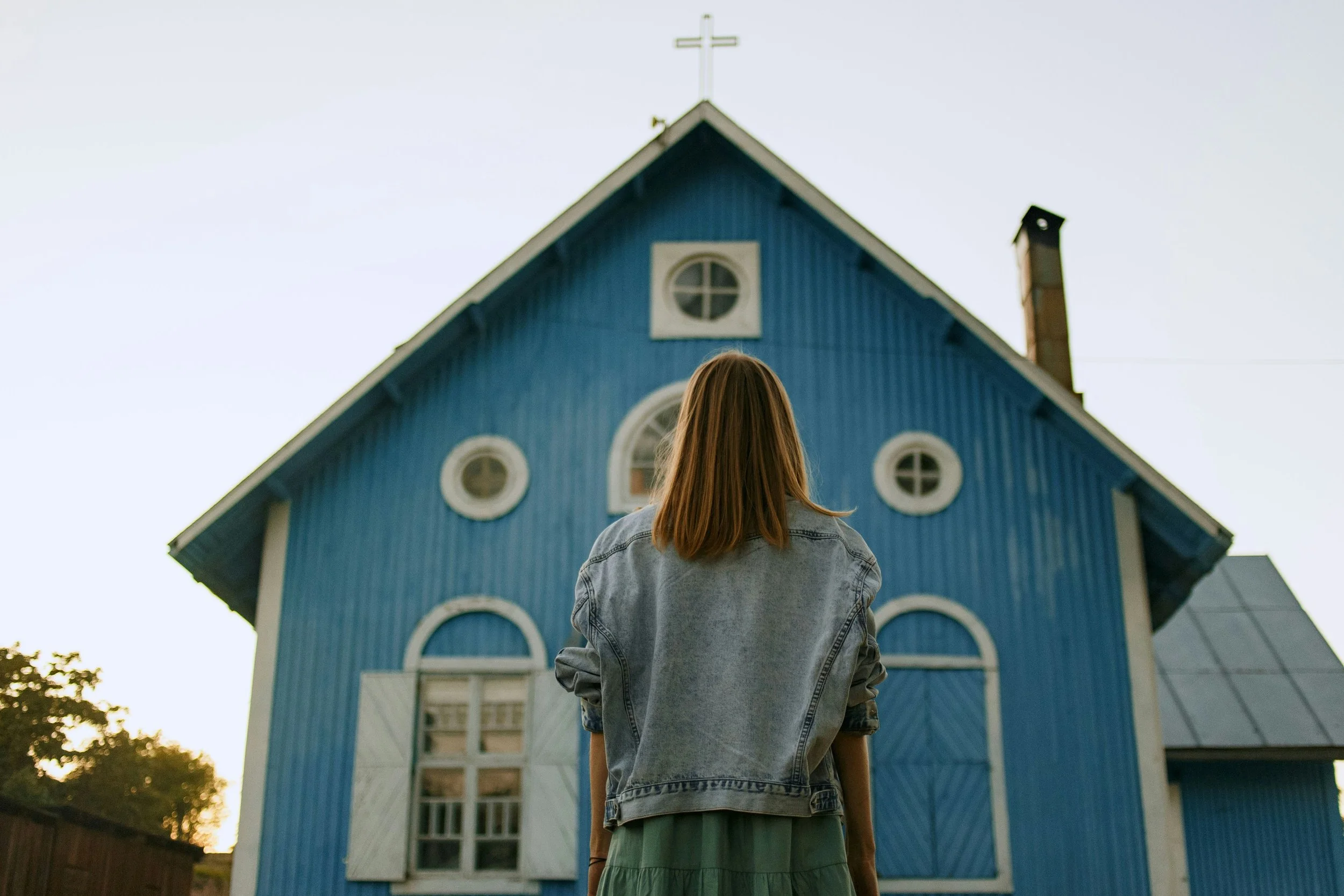
Photo by IZIUMLAB on Unsplash
Young people actually do want to go to church…
...We’re just not sure the church wants us.
I spent my early 20s almost always being the youngest adult in the room at church. It was not unusual for the next-youngest person to be in their early 50s, at best, when I showed up for Confirmation class or acolyte training.
So I wasn’t surprised that, in my ordination process, I was asked — usually in rooms full of adults, whose grown adult children did not go to church any longer — how can we bring young people to church? I was also expected to do this while interviewing for the job they held the keys to: priesthood. It was the classic damned-if-you-do, damned-if-you-don’t situation. Because the obvious answer was: have you asked your grown children why they don’t still go to church? And have you been willing to receive their answer with an open heart and willingness to change?
I didn’t have much tact in my ordination process, bless my righteous little heart. But I did have enough tact to not say that … then. Because I was also, honestly, wondering a lot of the same things.
I knew I loved God and the Church, and while these things are connected, they are not the same. I knew I needed to show up, week in and week out, and pray the same two thousand year old prayers, whether I “felt it” or not. I needed to be in community with people who drove me up the wall to practice loving my mild enemies, so that when I had the chance to speak to my real enemies, I might actually be able to have a conversation. Church had taught me I needed people of all ages and backgrounds around me to know Jesus, for the Body of Christ does not look like one kind of body.
I wasn’t sure many people my own age felt these same needs. Most of my friends from college were not Christian, and at the time, most were not especially religious. They didn’t feel the need I felt for faith, or so I thought. They did long for community, though. While I had my highest ideals of what church ought to be, I was too honest to think any churches nearby might have the kind of early-20s friends they were seeking.
But it was the fact that (1) most of those young folks did not know there were any other options for church, and (2) that the mainline churches around them were so sparse in demographic parity, that kept me up at night.
Well, any churches that affirmed women could lead or that queer people weren’t hated by God.
Because this was the real plank in my eye: I saw the way the megachurches around me were flooded with people my own age. My best friend from college — the one exception who was Christian and actively looking for church — talked about how she tried every single Episcopal and Lutheran church for a twenty-mile radius and felt nothing but iced out. But when she dipped her toe in the booming nondenominational church up the road, she left worship with five phone numbers of people her own age who were genuinely excited to hang out. She confided in me that only about half the people in said megachurch actually aligned with the church’s (admittedly, well buried) theological and political stances on women and queer people. There was a blend of cognitive dissonance and going along to get along that, you might imagine, I have some critiques of.
But it was the fact that (1) most of those young folks did not know there were any other options for church, and (2) that the mainline churches around them were so sparse in demographic parity, that kept me up at night.
So I began to think, and pray, and wonder: what gifts had God given me to help me help my peers try to trust church — especially a “new” kind of ancient, liturgical, Folgers-coffee-hour, no-light-show kind of church? This was actually extraordinarily obvious: the internet. If me and my friends picked new taco places to try based on Instagram, why weren’t pastors and churches trying to get in on the internet game? So I tried it.
Years later, I’m the Vicar of a thriving church plant where my oldest parishioner is in her early 70s and more than half the congregation is under 45. Most of this is God, but some of it is my own willingness to look a little stupid on Reels or TikTok, and some of it was capturing the cultural zeitgeist of this moment: young people know, in the wake of lockdown and in this current political nightmare, that we really need incarnate community. We are desperate for analog spaces. We live far from our families and miss being a part of intergenerational life. We want a third space that isn’t measuring us for company cuts or expecting a tip.
Young folks are actually really hungry for church.
The church just had to be ready for us.
So here are a few of my learnings from these last few years, now that I am approaching my mid-30s and solidly in the median age of my congregation:
Your website is your front door. Explain what you do on Sundays EITHER without any church jargon (this includes “coffee hour” and “Eucharist” and “formation”) OR by explaining each church term in the best secular comparison you can. Humbly, I offer my church’s website as one place you might want to start for some inspiration: https://www.jubileeatx.org. Relatedly, most people will watch your livestream before they ever darken the door.
Greet first time guests warmly, but know they may need a little space. Have at least 3 points of contact for them to plug in: info in the bulletin or something they can take home to contact people, someone who greets them at the door, and someone in the pews looking out for newbies who are a bit overwhelmed.
Children are not the future of the church, they are the church. Make room for them, and their noise and their wiggles, in the worship space. Children will only grow up and go to church if they spent their growing up going to church.
Relatedly: working class families are shelling out mortgages for childcare, and we’re exhausted. But we also want time to simply enjoy our kids. The greatest gift the church can give families is space to enjoy our children, which means we don’t typically need or want a traditional nursery where we drop the kids and go away for hours — we’ve done that all week. Maybe we want a little break, but mostly we want people to help us with our kids — feed them, maybe help watch them and teach them during the sermon so we can hear it — and space for us to chit-chat with other grown ups after worship while our kiddos zoom around with their new little google-eyed crafts or play with the stack of Bible-y kids books set out for them.
Take God so seriously that you don’t take yourself too seriously. I don’t know about you, but I am not special or powerful enough to break a 2,000 year old prayer all by myself. So I’m not going to break this 2,000 year old tradition by being a human praying instead of a robot reciting.
Don’t try to gloss over how freaking weird church is. Every week when we have Eucharist, it could be summed up as: “Behold: our dead God, now raised, let’s eat Him!” That is so strange, y’all. The mystery is the magic. Trust us to step into it with you.
People are desperate for the good news of God in Christ. Young people and young families are so tired of being sold shallow takes and quick fixes — we want to know the God of the universe, the unknowable mystery, is alive and at work. We need to know that this fragile earth, our island home, is worth something in the cosmic balance. We want a place to share our gifts and our love, and we don’t want trite, ridiculous arguments over our romantic interests to keep us or the church from seeing how Christ is tearing down walls to bring in the kingdom of God, ready or not.
We do not need easy answers. We want an ancient, divine pattern of prayer that gets us outside our own anxious minds. We need to know that God is sovereign and God is here. And we’re hoping you’re ready to share that with us.