The Worst Kind of Evil
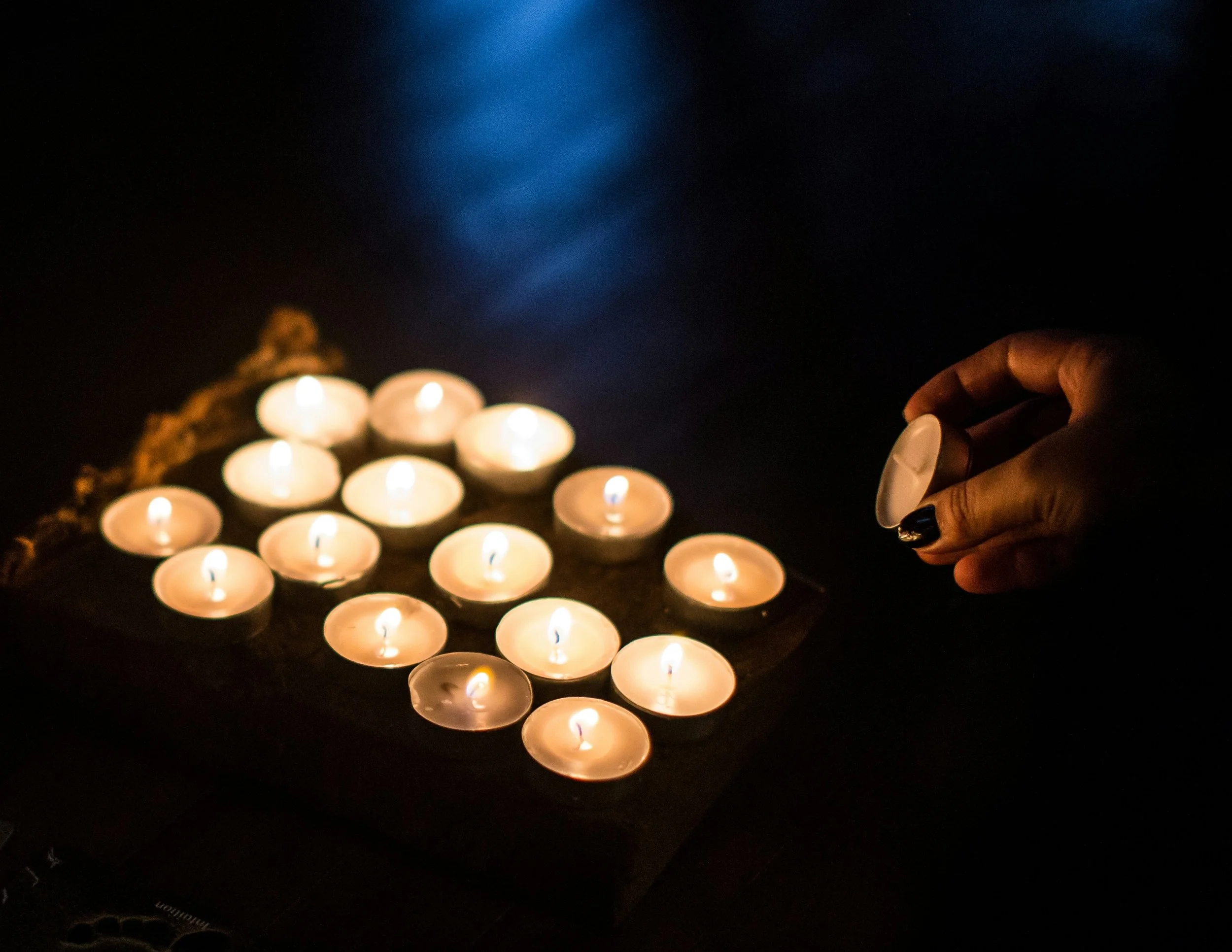
Photo by Ricardo Jimenez on Unsplash
This column was originally published in the Minnesota Star Tribune and has been reposted with permission.
If I could dig a hole deep enough to get to a place where Wednesday’s school shooting never happened, I’d grab a shovel immediately.
I can feel the weighty metal strike the ground again and again, sense the worn wooden handle splintering in my hand. I would keep digging, deep into the teeming, fecund, black and wet soil of south Minneapolis.
I would dig a hole deep and wide enough for myself and my two young sons. I envision us sitting down there together: quiet, dark, peaceful, safe.
In the clear light of day my vision is exposed as a ridiculous fantasy, the mad-dash last hope of a desperate mother. There is no hole deep enough to erase the tragedy at Annunciation Church, just two miles from my home. No memory eraser in that black dirt that could make our neighbors and friends forget the horror of picking up their children after a school worship service turned into a killing ground, where little kids had to be heroes for each other and parents could only scream and beat our fists and hope that the blood splattered on schoolchildren was not lethal. Even though for two of them, it tragically was.
The experience of American motherhood is so often one of desperation, quiet and alone, our faces lit by screens at 3 a.m. As much as I long to escape to a deep, dark, safe hole with my children, and for them never to leave my grasp or my sight, I know they would hate that. They want to run and play and live, gulping in great gasps of fresh and free air, soaking in life with the exuberance we too often wring out of children, turning them into dour and cynical adults like us.
I knew some of the kids in that worship service. I knew them running and jumping on the basketball court, giggling and joking with their siblings and friends. Not like this. When I watched the videos they always show on social media after a school shooting, this time I recognized faces of neighbors and friends. I kept pushing “hide.” This was too much to bear.
I do not know the desperation of parents and caregivers rushing to pick up children after a mass shooting. But their desperation is not altogether unfamiliar in a world where we treat kids as collateral damage: in Ukraine, in Gaza and, yes, in America. I understand why so many parents devote endless hours to the perfect organic diets for their kids, why so many of us research endlessly where to send our kids to school, how to address their medical needs. On a very deep level we sense that when it comes to protecting our children’s lives, we are ultimately mostly powerless, adrift in a sea of powerful interests, in a world where profit is king and kids are another line on a national expense sheet.
As a pastor and author of a recent book on radicalization, violence and young men and boys, I can’t help thinking, too, of another desperation: that of parents of troubled, radicalized boys and young adults. This shooting, like so many mass shootings that arise out of hatred, was brewed in a toxic online stew of marginalization, hatred, violence, anger and mixed-up ideas about heroism and guns.
Religion — Christianity — is here, too. Of course. The shooter invaded a sacred space, a sanctuary, and brought along deadly weapons and menacing hate. In these moments, I take refuge not in a militant, warlike, crusader Jesus, but instead in the savior who reminded me, early Wednesday morning just as I heard the news of a school shooting in my neighborhood:
“They killed me, too.”
This is the same Jesus who encountered a desperate, sorrowful father who came to Jesus seeking help for his son. We find this story in the Bible, in the Gospel of Mark, chapter 9.
Jesus is in the midst of a great and angry crowd, surrounded by chaos, as his disciples argue with religious leaders. At the center of it all is a father and his son, who we learn has a “demon.” No one can help the boy or his father, and after lamenting the state of the crowd and of society, Jesus requests that the father and son come to him.
Like a parent finally arriving at a long-awaited doctor appointment for a troubled child, the father tells Jesus the history of his son’s difficulties. Jesus listens patiently. The father requests again, desperately:
“If you are able to do anything, have pity on us and help us!”
Jesus says, of course, that all things are possible for those who believe.
The father’s reply is a clarion call to a nation today in mourning and desperation, plaintively looking for a way out of our shared violent morass.
“I believe. Help my unbelief!”
The rest of the story is miraculous and renewing. When Jesus rebukes the spirit that is tormenting the father’s son, the boy slumps forward and appears dead. The natural assumption of a competitive and hard-nosed world is that to defeat evil, we must destroy and kill it. That greater violence is our only tool to stop violence. That somehow we can hate hatred out of existence.
But of course the world also has its miraculous moments of resurrection, and of hope grounded in times of great pain and fear.
What Jesus did next is critical for our current painful and divided and angry moment. He reached out his hand to the boy and lifted him up so he could walk. Jesus’ most important miracles — God’s most important acts — are not ones of destruction, killing or death, but instead of resurrection, of bringing life out of death, of finding hope and love where there seemed only to be darkness and despair.
Remember that the story began with the religious leaders and Jesus’ own disciples arguing, frustrated that they could not solve this problem on their own. After the miracle is complete, Jesus’ disciples corner him and ask: “Why could we not cast it out?”
Jesus’ response was echoing through my head all day on Wednesday, when we learned that students at Annunciation were praying when the shooter invaded their space with bullets.
“This kind can only come out through prayer,” Jesus said.
It is a sign of our debased and despairing times that prayer itself has become a point of partisan contention. Some have said that Wednesday’s shooting is a terrible sign that thoughts and prayers are not enough to stop the gun violence that is killing our kids. Certainly prayer alone — empty prayer, lip service prayer, followed by inaction and subservience to the gun lobby — that kind of hypocritical religion is that which Jesus calls a whitewashed tomb.
Certainly we need robust legislation and action that prioritizes children’s lives above all else, especially profit, especially when it comes to gun regulations.
And still Jesus’ words echo in my mind. “This kind,” he said, and I think of the worst kind of evil and hatred and violence that came right here to my neighborhood, to my kids’ friends and teammates. This kind of evil that we know all too well in America. We have not solved it working against one another, in Congress, in houses of worship, in families. We must solve it together with humility, with compassion and, ultimately, with love.
I have to think that before anything else will work, we must restore a sense of compassion and humanity to our government. This is what I want from our leaders more than anything else in this moment.
From the White House to the Minnesota State Capitol to the streets of Minneapolis, these are the words I want our leaders to keep close, and stop glorifying and uplifting all those who do otherwise.
The Rev. Martin Luther King Jr. said this in a sermon, a decade before they killed him, too:
“Somewhere somebody must have some sense. Men must see that force begets force, hate begets hate, toughness begets toughness. And it is all a descending spiral, ultimately ending in destruction for all and everybody. Somebody must have sense enough and morality enough to cut off the chain of hate and the chain of evil in the universe. And you do that by love.”
We have no other choice, not just for my kids or your kids, but for all kids everywhere.