Where is the God of Walter?
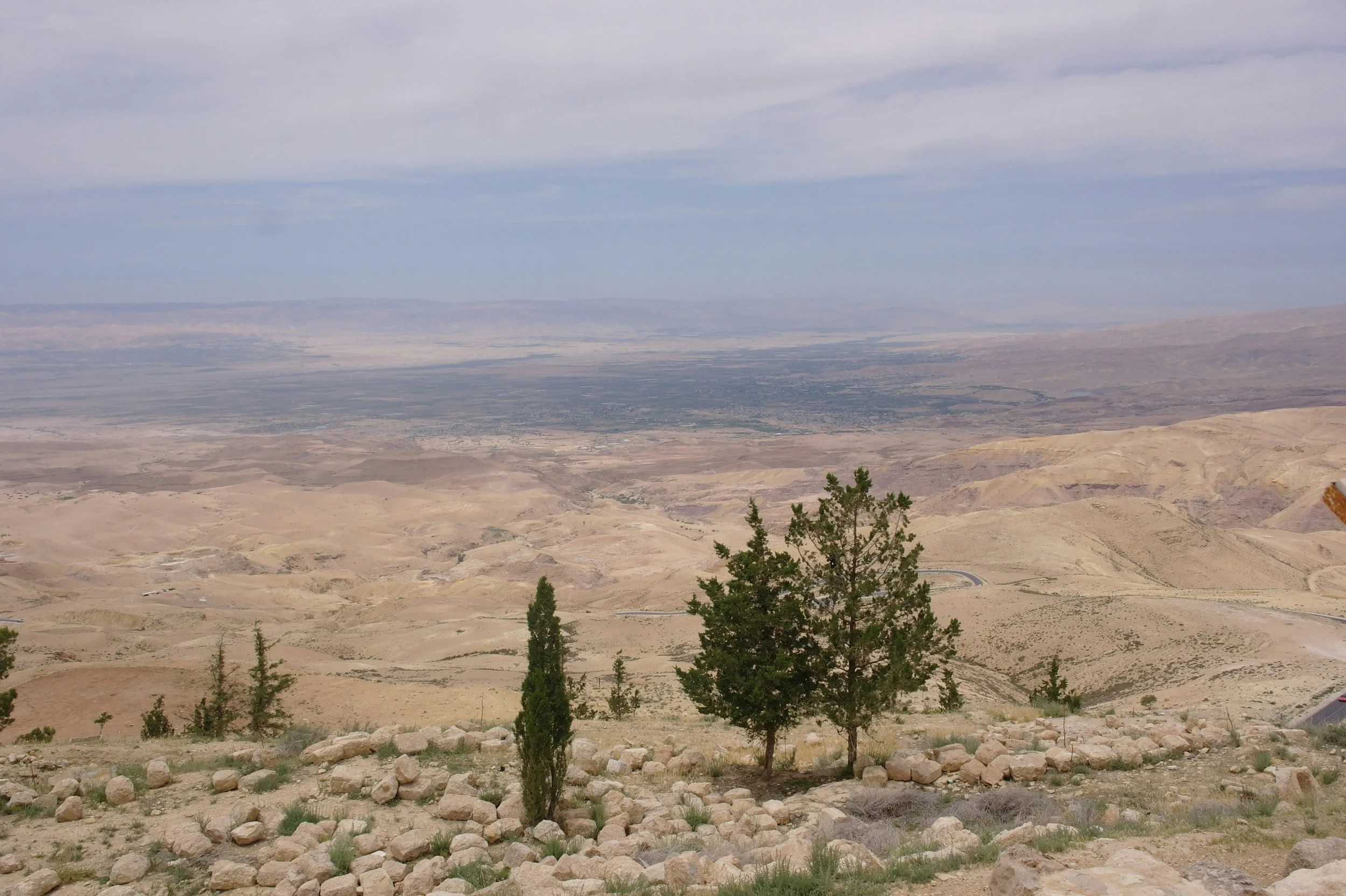
Photo by Thomas Vogel on Unsplash
Note: This sermon was preached at Central United Methodist Church in Traverse City, Michigan, on July 20, 2025, the day after Walter Brueggemann’s funeral, as the first sermon in a series at his home church entitled, “What Walter Taught Us.” Church Anew had the incredible honor of hosting Rev. Dr. Walter Brueggemann as our featured columnist from our launch in 2020 through his passing in 2025. We have invited colleagues and students of Dr. Brueggemann to contribute to the Church Anew blog to celebrate and continue his legacy.
Lessons: 2 Kings 2:1-18; Acts 1:6-11
I am honored to be here and I thank Linda, my former student, for her kind invitation to preach today, especially to lead off your summer series on “Things Walter Brueggemann Taught Us.” As I said in my eulogy at his service, I was never Walter’s student formally, but I’ve been sitting at his feet ever since I first read his book The Prophetic Imagination as an 18-year old college freshman. Much later, I was Walter’s crosstown colleague in Atlanta for about seven years during which time we became good friends. I’ve edited six of his books, a small percentage of the more than 120 he wrote.
Now if you cornered me and forced me to pick, I’d probably have to say that Walter’s 777-page magnum opus, Theology of the Old Testament: Testimony, Dispute, Advocacy, is the most important. That means, I suppose, that even more than his work on specific prophets or psalms, Walter has most impacted my understanding of God: theology properly so called. And so, that is what this first sermon in this summer series is about—in my judgment, among the many, many things Walter Brueggemann taught us, by far the most important is that he taught us about God: the Lord God of Israel, the God and Father of our Lord Jesus Christ. Of course, Walter taught us about God through what he taught us about the prophets, the psalms, and many, many other biblical texts. More on that in a moment.
But first, I wanted to quote Walter’s New York Times obituary, where his good friend Jim Wallis said Walter was “our best biblical scholar of the prophets—and he became one himself.”1 I couldn’t agree more. The last pictures I have with Walter show him shorter than me, likely through aging, but in my mind, he is a towering figure, at least 6’5” with the physical presence to accompany that frame and his commanding voice. I’m not entirely sure which prophet to compare him with…well, that’s not completely true. In my eulogy, I suggested Jeremiah, on whom Walter wrote no less than five books.2 Let that sink in a minute: five books on Jeremiah. Of course we could compare Walter to Isaiah, or even Moses, but I think Jeremiah is the one—at least of the writing prophets.
But what of the non-writing prophets, those prophets who wrote no texts but about whom many stories were written? Here I have Walter pegged as Elijah for several reasons, one of which is found in the Old Testament lesson for today from 2 Kings. Before getting to that, I want to mention something else Walter taught us—something fundamental, foundational, maybe even primeval for him: and that is that we must always go back to the biblical text. Always go back to the Bible—always, always, always. And then again and again and again. Did I say “always”? What about “again”? Walter modelled this practice incessantly through study after study, book after book, publication after publication, often on the same biblical text (at least five books on Jeremiah!). He explicitly said as much, too, and on more than one occasion—but one instance in his vast corpus that is seared into my memory comes from a little book he wrote shortly after the outbreak of Covid-19. “I, as [a] Bible teacher,” he wrote, “believe that any serious crisis is a summons for us to reread the Bible afresh.”3 Go back to the text, you see? Always and again, again and always, especially in crisis. And we have a crisis on our hands now, don’t we? Lots of crises, to be sure, and in lots of ways, but most immediately the crisis of our dear friend and great teacher no longer being with us.
And so, alongside you, I find myself blinking away tears in a new day: a day without the prophet Jeremiah A. Brueggemann. Or, perhaps better, the prophet Elijah A. Brueggeman.4 I’m not yet sure what to do in a world without Walter. But I know what he’d do—he’d go back to the text. And what do you know? Just like Walter said it would, the Bible has resources for us to think about the crisis of this day, the day we lost our Elijah because that is the same crisis Elisha faces in Second Kings. He is about to be without his Elijah, too.
Our text from Second Kings is the famous one about Elijah’s departure, and the narrator tells us as much, in the very first verse, so we aren’t surprised when it happens. What is surprising is that Elijah apparently wants to do this alone. Not once, not twice, but three times, he tells his erstwhile sidekick and successor, Elisha, to stay behind: at Gilgal, then at Bethel, then at Jericho (2 Kgs 2:2, 4, 6). Elijah is sent to these places by God, perhaps as a kind of walk down memory lane, but whatever the case, at each stop, Elijah commands Elisha to stay behind. But Elisha won’t do it. He knows better than to leave his master. Perhaps he knows something is up. Perhaps he senses that this is the day Elijah will leave him.
Go back to the text, you see? Always and again, again and always, especially in crisis
Even if Elisha didn’t know that, some other prophets tell him as much: the company of prophets at Bethel and then another company of prophets at Jericho drill it home, painfully. Twice he is asked: “Do you know that today the LORD will take your master away from you?” (vv. 3a, 5a).5 Elisha replies that he already knows—especially now!—and then tells them to shut up about it. He is clearly not happy about the situation and he doesn’t need annoying people, prophets or not, well-meaning or otherwise, reminding him about it (vv. 3b, 5b).6
Elisha knows and so Elisha persists. He refuses to stay behind but goes with Elijah to the final stop: somewhere across the Jordan, into no-man’s land, into the desert. To get there, Elijah must perform one last miracle. He takes his mantle, the same one he used to cover his face when he encountered God on Mount Horeb, the mountain where God made covenant with Israel (1 Kgs 19:13); and the same mantle he had draped over Elisha’s shoulders when God picked him as his successor (1 Kgs 19:19)7—he took that mantle, rolled it up as if it were a stick, and struck the waters of the Jordan River. And the waters parted! To this side and that, and the two of them, Elijah and Elisha, crossed over on dry ground (2 Kgs 2:8). If this sounds to you a bit like the Book of Exodus and the Book of Joshua remixed and mashed up, you are exactly right. We are no longer simply in the Transjordanian desert; we are in God’s country, miracle-land, where anything can happen.8
And it does! But not before a final conversation between Elijah and Elisha. The great elder prophet asks the great prophet-to-be what he wants from him before he departs. Elisha is hungry and so he asks big: please, he says, let me have a double portion of your spirit. In Hebrew, he asks for two mouthfuls (pî-šənayim).9That’s a lot to swallow! No wonder Elijah says in reply, “you have asked a hard thing.”10 But it’s possible, Elijah continues, if you are able to see what happens next; but if you can’t—if you don’t see it, it won’t.
But we already know that Elisha will not forsake his beloved Elijah. And so he will see—and he does! As they walk along, the two of them are suddenly separated by a chariot and horses of fire and Elijah is taken up,11 in a whirlwind or tempest—in a great, turbulent storm—up to heaven.12 Though he’s been shadowing Elijah all day, Elisha is still caught off guard by this. He is overwhelmed, surprised, frightened—perhaps all of the above! He cries out to Elijah, “My father, my father!” Elijah was that kind of figure for him and in more ways than one. But Elijah was yet still even more, because Elisha next calls him by the very thing that he is witnessing: “Elijah,” he says, “The chariot of Israel and its riders!” (v. 12).13 We can understand “my father, my father!” easily enough, but this other form of address to Elijah is curious and perplexing. It seems that Elisha is saying that the prophet Elijah is Israel’s true chariot and horsemen.14 Said differently, when you have a prophet like Elijah, you don’t need a standing army. (Think about that for a minute!)
But suddenly Elijah—worth a whole army and then some—is gone. And that situation involves a great deal of doubt, worry, and despair. And so Elisha tears his clothes in distraught mourning. Who knows how much time elapses between that and what happens next, but Elisha eventually goes over and picks up the mantle that fell from Elijah amidst the storm and the fire and the horses. Elisha picks it up and heads back home. But the Jordan stands between him and civilization, and so he hits it with the mantle, just like Elijah did. But nothing happens. And so he asks a question: “Where is the LORD, the God of Elijah?” (v. 14).15
That is a fascinating question, when you stop to think about it.
I mean, Elisha should know the answer to that question: The Lord, the God of Elijah, is the One who just took his master to heaven. That’s what the company of prophets told him, twice no less, and he said he already knew it before they said it. And then Elisha saw it with his own eyes—saw the chariot and horses of fire, the whirlwind; saw the mantle fall earthward.
But he still asks the question in all its poignancy: Where is God, now that the great prophet Elijah is gone? And we find ourselves asking it too: Where is God, now that our great friend and prophet Walter is gone?
That’s the question, isn’t it? That question asks what will become of us, those of us left down here, in the absence of someone who taught us so much and so well about the only One worth knowing, someone who knew the Holy One of Israel so intimately. What are we supposed to do now?
And so we ask: Where, now, is the God of Elijah? Where, now, is the God of Walter? Is God only with Elijah, up there in heaven somewhere? Is God only now with Walter, now that God has received him? What about all of us left down here, prophet-less? What are we supposed to do?
We are asking that question, aren’t we? “Where is the God of Elijah?” and “Where is the God of Walter?”
Note how that question is posed by Elisha in Kings. It isn’t just “where is God?” but “Where is the God of Elijah”—or, for us, the God of Walter. God is named and identified with reference to our great prophets, about whom God cared so much that God spoke to them as someone does with a friend (cf. Exod 33:11).16 It’s not just us lesser types, un-prophetic individuals, asking about God’s general whereabouts, calling on a non-descript God to be present in our great time of absence. No. Elisha’s question involves and invokes Elijah. And so ours does the same with Walter. Where is the God of Elijah? Where is the God of Walter? Surely, when God hears those great names, the names of God’s beloved prophets and interlocutors, God will spring into action, turning absence into presence.
And so it is!
“Elisha took the mantle of Elijah that had fallen from him and…struck the water again” for a second time.
“And the water was parted to the one side and to the other, and Elisha crossed over” (2 Kgs 2:14).
Where is the God of Elijah? Here. Not just there in the fireworks, or up in the heavens, in the turbulent transportation of our dear departed in the faith. Sure, yes, there. But not only there. No. Also here. Here.
Elisha struck the water once. Nothing. He then asked his poignant question, summoning the Lord to his side because of Elijah: “Where is the God of Elijah?” Then he struck the water a second time. Then something happened. The question, you see, generated the miracle. The water parted and he crossed over.
Some interpreters have thought that Elisha’s two hits of the Jordan versus the one by the great Elijah, proves Elisha is only second best.17What Elijah does with ease, Elisha accomplishes only with twice the effort. No servant is greater than their master, you might say (see John 13:16). But I think the two strikes reveal something else instead, or at least something more—namely, that Elijah’s cloak all by itself isn’t going to do the job. The Word of God isn’t some parlor trick; you don’t conjure it up with a magician’s wand. One tap of the mantle won’t do anything if it lacks—listen to this—if it lacks the Spirit of the Lord.
The question “Where is the God of Elijah?” precedes the second strike—and that is the strike that proves effective. It isn’t just about Elijah, that is, and certainly not just about his robe, for heaven’s sake. It’s about the Spirit of the Lord God of Israel, it’s about Elijah’s Lord and God, who works miracles in the world, including the continuity of prophets, despite the departure of a great one.
Those other prophets who waited across the river realize what has happened as soon as they see Elisha: “Elijah’s spirit rests on him,” they exclaim (2 Kgs 2:15). “Apostolic succession,” we might say, even without the laying on of hands!18 But even though Elijah must obviously be gone for his spirit to now rest on Elisha, these other prophets can’t imagine a world without Elijah. They want to go search for him. But of course Elijah is not to be found “because ‘he is risen’”!19
Which brings us to the New Testament lesson. The general scene in Acts 1 is fundamentally no different than 2 Kings 2. The prophets—make that the disciples—are once again in crisis: Jesus is about to leave them. They want answers. Most of all they want a quick fix. They want the Lord to restore the kingdom to Israel right about now. What they get in response is, like Elijah’s reply to Elisha, not entirely reassuring. “You’ve asked a hard thing” (2 Kgs 2:10). So, not yet is the answer. “It’s not for you to know,” Jesus says to them (Acts 1:7). But after that slight reproof, he does encourage them: his departure isn’t about loss only, it’s also about gift—the coming of the Holy Spirit, which permits faithful and effective witness. Here and beyond (v. 8).
But, you know, the apostles are kind of slow—kind of like us. And so, after Jesus ascends and a cloud hides him from view, they stand there, staring, waiting (vv. 9-10a). I imagine they were wondering: What now? Where is God now? Where is the God of our Lord Jesus? And, then, suddenly, they are not alone and abandoned, but reassured: This Jesus—two heavenly messengers tell them—this Jesus will come back in the same way you saw him go (vv. 10b-11). The clouds will roll back, one day, just like those waters in the Jordan River way back when with Elijah, yes, but also with Elisha.
So those are our texts, 2 Kings 2 and Acts 1. And now that we’ve walked through them I hope you will agree that they do indeed give us resources for our life now, now that Walter has been taken up from us. There can be no doubt that we don’t like that news, that we wish it weren’t true. We’d be happy to have fifty prophets go look for Walter because maybe he’s gone somewhere to speak or maybe he is back in his study writing another book! And there can be no doubt that we mourn the news of Walter’s departure, even if we don’t physically rend our clothes. And there can be no doubt that we wonder in Walter’s absence, what’s next? Who will speak for us? Who will speak to us? Where is God in all this? Where is Walter’s God?
Faced with such loss and absence, God often feels absent, missing in action. That’s yet another thing Walter taught us because he knew the Psalms inside and out and the psalmists know better than anyone all about the absence of God. And so here we are: dumbfounded disciples staring into the sky, sorrowful Elishas eyeing up Elijah’s mantle that has been left behind. Because let’s face it: there is a mantle over there, isn’t there? Walter left a very extensive, very wordy mantle! 120 books and then some. That’s a whole lot of mantle! And that mantle will still work, will still do something, if we will take it up and use it. But it won’t do anything, not a single thing, without the Spirit of Walter’s God behind it, animating it.
And that means we have something else: we have the Spirit—we have access to it—according to both 2 Kings 2 and Acts 1. And Acts 2! And the Spirit can and will animate us to be faithful witnesses, maybe even permit us to do wonders.20
There’s one last thing to say, something that Walter himself noted in his commentary on 2 Kings. And that is that Elijah and Jesus both transcend death. Their lives continue on, Walter writes, in the splendor of God’s presence.21 And so, too, for we who believe the gospel, does Walter’s life, along with all the saints, continue on in God’s light.22 And there’s yet still more—and here I quote Walter directly: “Ascension as alternative to death means that the ascended figures are not finished. In each case, [both Jesus and Elijah continue]…a life with the potential of descending with power into the life of the world.”23 That’s why, to this day, Jewish families often leave an empty chair for Elijah. He might just show up for dinner! And that’s why, to this day, we Christians say we believe in Jesus Christ, crucified, died, and buried, but resurrected on the third day. That’s why we believe in the resurrection of the body and the life everlasting, and look for the resurrection of the dead, and the life of the world to come.24
“Where is the God of Elijah?” Elisha asked in despair and in sorrow. Absent? Gone?
No, not absent. Here. Still here after all. Just look at those waters roll back.
“Where is the God of Walter?” we ask in our despair and in our sorrow.
Here. Still here. Still active. Still speaking for those with ears to hear and tongues to speak and praise. Just look at all those books!
One last item: what about that double portion bit? When it comes to Walter, I’m not sure anyone could pull that off: 120 times two is 240 books! Seems highly unlikely to me. A double portion may be a bit too much to expect, but then again Elisha wasn’t half bad. Probably because Elijah’s God was his God too.
Thanks be to God for his indescribable gift and for his servant, Walter Brueggemann.
Amen.
1 https://www.nytimes.com/2025/06/17/us/walter-brueggemann-dead.html.
2 Or as many as seven: Walter Brueggemann, To Pluck Up, to Tear Down: A Commentary on the Book of Jeremiah 1-25, International Theological Commentary (Grand Rapids: Eerdmans, 1988); idem, To Build, to Plant: A Commentary on Jeremiah 26-52, International Theological Commentary (Grand Rapids: Eerdmans, 1991); idem, A Commentary on Jeremiah: Exile and Homecoming (Grand Rapids, MI: Eerdmans, 1998); idem, Like Fire in the Bones: Listening for the Prophetic Word in Jeremiah , ed. Patrick D. Miller (Minneapolis: Fortress, 2006); idem, The Theology of the Book of Jeremiah, Old Testament Theology (New York: Cambridge University Press, 2007); idem, Preaching Jeremiah: Announcing God’s Restorative Passion (Minneapolis: Fortress, 2020); idem, Returning from the Abyss: Pivotal Moments in the Book of Jeremiah , ed. Brent A. Strawn (Louisville: Westminster John Knox, 2022). The number is five if the first three books are considered one, since the third is a one-volume reprint of the first two.
3 Walter Brueggemann, Virus as a Summons to Faith: Biblical Reflections in a Time of Loss, Grief, and Uncertainty (Eugene, OR: Cascade, 2020), xi.
4 The middle initial is Walter’s own: his given name was Walter Albert Brueggemann.
5 The specific language is somewhat curious: “Yhwh will take your master from upon your head.” Peter J. Leithart, 1 & 2 Kings, Brazos Theological Commentary on the Bible (Grand Rapis: Brazos, 2006), 175, connects the head language to the curious account that comes in 2 Kgs 2:23-25. For the latter, see Brent A. Strawn, “Revisiting Elisha and the Bears: Can Modern Christians Read—That Is, Pray—the ‘Worst Texts’ of the Old Testament,” in idem, The Incomparable God: Readings in Biblical Theology, eds. Collin Cornell and Justin Walker (Grand Rapids: Eerdmans, 2023), 131-63.
6 As Walter Brueggemann notes in 1 & 2 Kings, Smyth and Helwys Bible Commentary (Macon, GA: Smyth and Helwys, 2000), 295, Elisha is not prepared for this event.
7 The particular form, ʾaddartô, “his mantle,” occurs in the Book of Kings only in 1 Kgs 19:19 and 2 Kgs 2:8. Elsewhere in the Hebrew Bible, it occurs only in Jonah 3:6.
8 See, among other things, Walter Brueggemann, A Wilderness Zone (Eugene, OR: Cascade, 2021), especially the lead essay.
9 See Leithart, 1 & 2 Kings, 177, on the spirit as food.
10 Elijah’s response is “less than reassuring” (Brueggemann, 1 & 2 Kings, 295).
11 Like others, Brueggemann says that Elijah does not ride in the chariot (1 & 2 Kings, 295), but this is at least debatable. The Greek translation has a passive verb, anelēmphthē, “he was taken up to heaven,” which is a possible rendition of the Hebrew consonants. A passive implies an agent of some sort, with the chariot and horses the nearest antecedent. A very slight emendation (or defective writing) would make the Hebrew verb plural “they took him up.” Even that could be read as a circumlocution for the passive.
12 For the storm indicating that Elijah’s ascension was turbulent, see Brueggemann, 1 & 2 Kings, 295.
13 The plural “riders” seems odd with reference to the singular Elijah. Perhaps for this reason, the Greek and the Latin translations read a singular form (“rider”).
14 See Brueggemann, 1 & 2 Kings, 297. Compare 2 Kgs 13:14 where the same terminology is used of Elisha, predicate of him by none other than the sitting king, Joash! See Richard Nelson, First and Second Kings, Interpretation (Louisville: John Knox, 1987), 163.
15 NRSVue adds “Where is he?” a second time, apparently from ʾp-hwʾ, which other translations take differently (cf. NJPSV, CEB, NASB, KJV). Everett Fox, The Early Prophets: Joshua, Judges, Samuel, and Kings: A New Translation with Introductions, Commentary, and Notes, The Schocken Bible 2 (New York: Schocken, 2014), 707, translates “indeed,” but in a note admits “no good solution has been found to this awkward sentence.” The note to Robert Alter’s translation reads: “There is an evident glitch in the Hebrew syntax” (The Hebrew Bible, Vol. 2: Prophets Neviʾim: A New Translation with Commentary [New York: W. W. Norton, 2019], 533).
16 How else could we explain the consistently insightful work of our friend Walter other than intimate communion with God? His corpus of published prayers are remarkable testimony to a long conversation with his Lord.
17 Cf. Brueggemann, 1 & 2 Kings, 297: Elisha’s power is less than Elijah’s but adequate.
18 Nelson, First and Second Kings, 163: “The community of believers, the sons of the prophets, discover a continuity of office which arches over the discontinuity of the passing of a generation.” He continues: “God’s whirlwind blows away every love, every security, every safety. The same changeless God pushes ceaseless change on the world. Yet God’s commission for ministry transcends change. Elisha picks up the mantle of prophetic office and turns the word of God loose on yet another generation….[E]ach generation of the church has discovered a continuity of divine purpose, overcoming even the discontinuity of death. In a way similar to the disciples of Elisha, the church celebrates this continuity by retelling the stories of its founder and its saints, thereby claiming an inheritance of power and mission.”
19 Brueggemann, 1 & 2 Kings, 299.
20 Brueggemann, 1 & 2 Kings, 304: “The church is situated like Elisha: Elisha has the spirit to do wonders.”
21 See Brueggemann, 1 & 2 Kings, 302: Elijah did not die, “his life continues in the splendor of God’s presence”; neither did Jesus die (forever) “but lives in the splendor of God’s presence.” Unfortunately, “in both cases, Elijah and Jesus, the wonder of ascent and resurrection, respectively, are too demanding, too outrageous, too astonishing to be accepted” by us.
22 Note Brueggemann’s remarks in Conrad L. Kanagy, Walter Brueggemann’s Prophetic Imagination: A Theological Biography (Minneapolis: Fortress, 2023), 188: “Upon my death, I also have no doubt that whatever there is of me will be fully held and kept safe by God. I believe the gospel.” Kanagy also quotes Brueggemann as saying that he believed his death would “not interrupt the good rule of God” and that belief was enough for him (ibid., 177).
23 Brueggemann, 1 & 2 Kings, 303.
24 The creedal allusions are to the Apostles’ Creed and Nicene Creed, respectively.