Ordinary Time: A Way Out of Toiling and Spinning
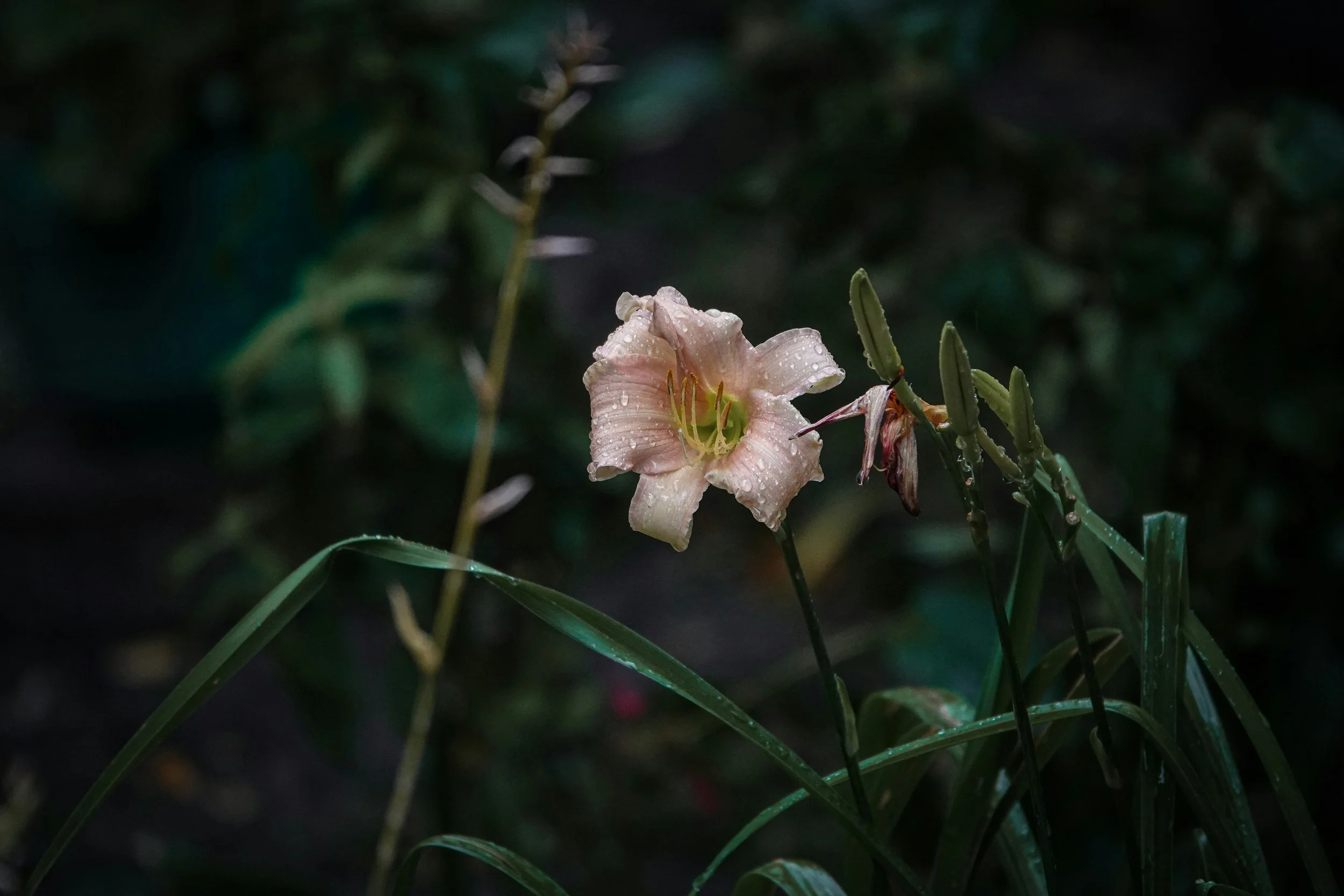
Photo by Oleksandr Akulenko on Unsplash
Do not be daunted by the enormity of the world's grief. Do justly, now. Love mercy, now. Walk humbly now. You are not obligated to complete the work, but neither are you free to abandon it. – Jewish Proverb, source unknown
There is an ache in our souls to be “undaunted by the enormity of the world’s grief,” but as we lean into this harvest season of Ordinary Time, a time in the church year when we are invited to do justice and love mercy, so many of us are so daunted, so overwhelmed, and so confused. Some of us are trapped in an anxious “fight, flight, freeze” cycle, facing a world that is changing so quickly and has become so frightening for us and for our vulnerable neighbor that our nervous systems can’t keep up. Despite our best intentions and despite our excellent theological grounding, our bodies are shutting down. It’s easy to be overwhelmed and find ourselves either in “fight” (overly aggressive, exhausting action), into “flight” (a giddy, live-laugh-love avoidance), or “freeze” (doom scrolling in frozen helplessness). Whether the work is our day job or the larger work of justice (or both!), how can we nurture a justice practice that can sustain not just the world, but also our own souls?
Before Jesus does anything, he pays attention.
Perhaps the third way of Jesus is not doing more, or doing less – but found in the holy pause we take before we take a single step. Perhaps Ordinary Time isn’t sustained by our push forward, but by the moment of stillness that we stop, wait, and pay attention to where God is already at work.
The first place I learned this was my garden. When I first bought my home, I was so excited for my tiny native garden in my corner of Atlanta to be part of the restoration of all things! A first garden, though, is overwhelming, and my plot of land was too big for my skillset. Every month, it got more overgrown, and I froze, unsure where to start, trees growing through the fence and invasive vines choking out milkweed. I don’t know where to start, I panicked. But I also started having my morning coffee on the front porch, and every day, as I sat out there on the porch, I saw my garden, without agenda, for the first time. I wasn’t looking at it with a plan. I wasn’t going outside “to work in the yard.” I just was watching. Then one day, barefooted and still in my PJ’s, I hopped off the porch “just to pull a few of those vines from the fence.” Then the next day, I just pulled a few tulip poplar saplings from the hedge. And maybe a bird bath would be nice right by the Black Eyed Susans… Now, though, the work didn’t come from a place of panic. Taking time to watch, without agenda, without a goal, without thinking “I’ll watch this garden so that I can work in it” opened up new possibilities. Paying attention birthed good, sustaining work. Consider the lilies, says Jesus, because Jesus knows that paying attention to these small things is where all the good work begins.
Jesus is considering the small things, the lilies, the little brown birds, yeast in bread, money lost in the house, seeds that grow into trees. He notices the small things that get overlooked. He notices the small people that get overlooked. Who touched my garment, he says when a sick woman reaches out in a crushing crowd in the hopes that just touching his clothes will heal her, and Jesus was paying attention so closely that he noticed someone brushing their hand on his cloak on a busy street.
Jesus is always paying attention. Jesus is always asking questions, trying to notice more deeply, trying to invite people he meets to notice themselves as well. What do you want me to do for you, he asks a blind man. Where is your husband, he asks the woman at the well.
Before Jesus does anything, he pays attention. He retreats to the desert to pray and pays attention to God. He sleeps on the boat in a storm, paying attention to his own tiredness before he hops up to save the world in the storm. He is doing what the old monk Brother Lawrence calls practicing presence.
I did not used to think that presence was enough. There’s a lot of work to do! We have to push ourselves to do it! I used to think that being a Christian was about pushing harder and further, always reaching to the end of ourselves, putting on our work boots even when we don’t feel like it and diving headlong into whatever invasive ivy is taking over our fence at the moment without “wasting any time” just looking around and doing nothing.
Then I see Jesus. He is resting in boats, and praying in the desert, and paying attention to people around him, and considering the lilies. They do not toil, neither do they spin.
I thought that there were two ways to go through life – toiling hard to be good (and being perpetually exhausted), or giving up and being selfish. I thought that life was fight, flight, or freeze.
I am learning that the way of Jesus is neither toiling and spinning, nor giving up.
This other way of Grace invites us to be very present, and very still, and notice, before we take one step. Then when the way opens, it is more like falling into a River than pushing a boulder up a hill. Presence invites us to see where God is already working, and joining Her.
When we are very still, and pay attention without agenda, the way opens.
It takes trust to be present, without being goal oriented. It takes trust to believe that God is there before us, preparing the soil, making a path. When we stop and pay attention, we are acting in trust that God does everything first. Grace says, “be still.” Your stillness itself will be part of the creation of a new thing.
What a difference there is when we stop pushing boulders up hills and release ourselves into this river of Grace that is already flowing, that is ready to carry us, that tells us that we are already enough, that we already have everything we need to join God in Her restoration of all things.
May “paying attention” be a soft place to land this Ordinary Time; restoration for your neighbor as well as your own soul.