St. Francis Helped Build a Church Anew
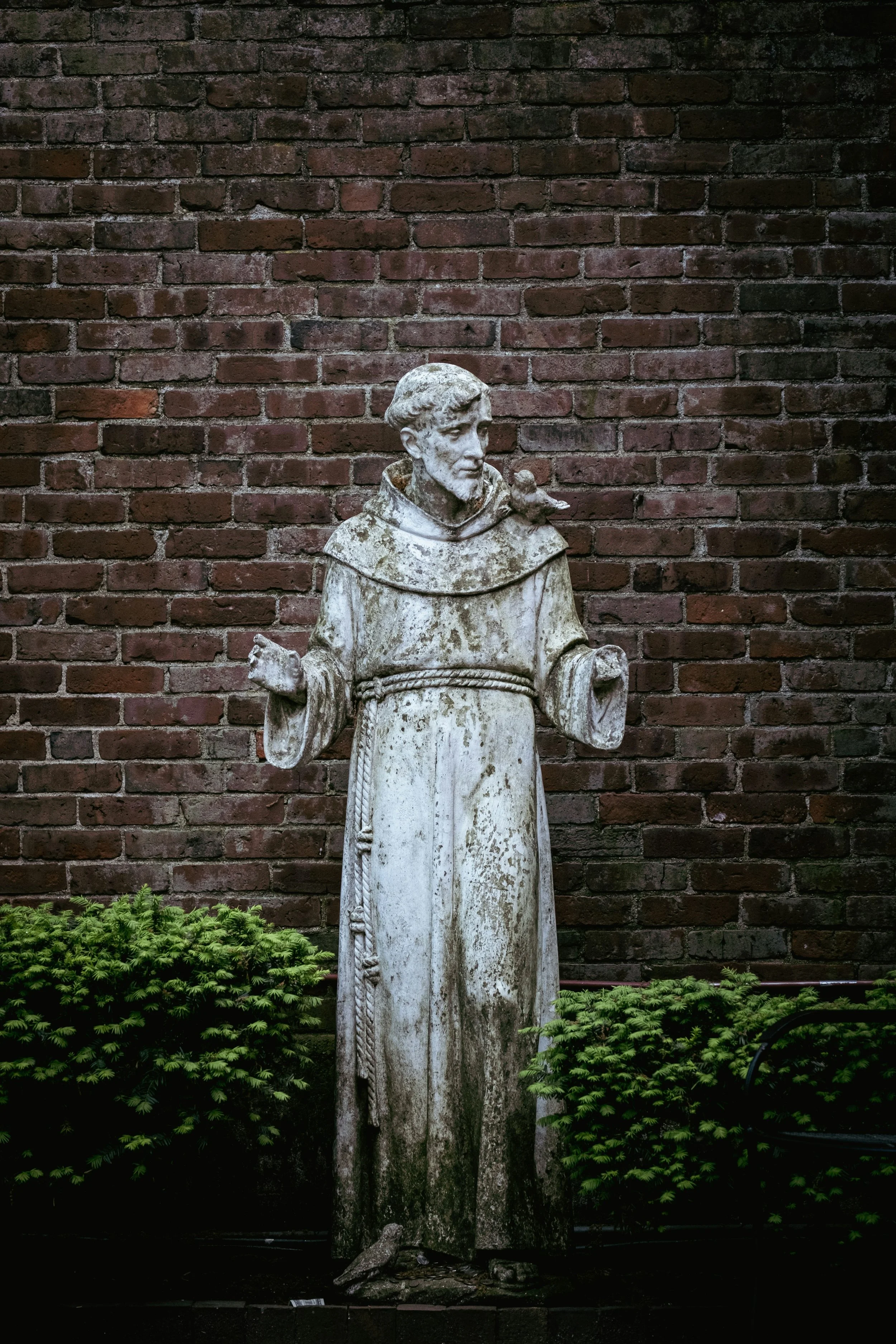
Photo by Wenhao Ruan on Unsplash
I write about Christianity’s complex relationship with money. My first book, The Unjust Steward: Wealth, Poverty, and the Church Today, traced how the early Church gradually moved away from Jesus’ radical message of poverty and his critique of wealth. The Gospels present a teacher who calls his followers to sell possessions, give freely, and resist the lure of wealth. Yet within only a few generations, Jesus’ critique of wealth was reinterpreted as a critique of pride, his embrace of poverty transformed into a valuing of spiritual humility, and the New Testament’s general suspicion of money became neutralized through a presentation of wealth as a morally neutral tool, one that can be used well when aimed at the building up of the Church.
This shift has long been debated. Many (including myself) see it as a tragic loss of the Church’s early witness to poverty, simplicity, and economic justice. Others view it more generously, as a step toward greater inclusion. Just as the Church opened itself to Gentiles, they argue, so too it went from a community on the margins to one that included the powerful and wealthy. Isn’t the Gospel supposed to be for all?
Perhaps the truth lies somewhere in between. What I do know is this: from time to time, the Church loses its reason for being. It becomes so aligned with wealth, militarism, and power that it ceases to offer an alternative vision of the Kingdom of God. In those moments people understandably ask: why be a Christian at all? And it is also often during such times that the Church rediscovers the radical witness of Jesus. His call to poverty, generosity, and nonviolence has renewed the Church again and again, reminding the world that Jesus was calling his disciples to something distinct.
St. Francis of Assisi was one such figure who helped the Church recover its radical witness in an age of decline. He famously received his call in a dilapidated church building where he heard the words: “Go, Francis, and repair my house which, as you see, is well-nigh in ruins.”1 Might that be our call today as well? Yet I sometimes wonder whether the way Francis is celebrated obscures the most vital aspects of his life. In my denomination of the Episcopal Church, for instance, he is primarily honored through the blessing of animals. To be clear, I love pet blessings (and I’ll even bring my own funny-looking dog to one this October 5). But what if we also recovered Francis’s radical poverty, simplicity, and love of the human Jesus as an essential way of rebuilding the Church anew? To that end, here are four aspects of St. Francis’ life that I see as meriting more discussion.
A Key Gospel Text
St. Francis’ transformation from the son of a wealthy merchant into the figure we honor today unfolded in stages. After his call to “rebuild the church,” another decisive moment came when he heard Matthew 10:7–10 read at mass: “As you go, proclaim this message: ‘The kingdom of heaven has come near.’ Heal the sick, raise the dead, cleanse those who have leprosy, drive out demons. Freely you have received; freely give. Do not get any gold or silver or copper to take with you in your belts–no bag for the journey or extra shirt or sandals or a staff, for the worker is worth his keep.”
From that day, Francis embraced radical poverty, itinerant preaching, and near-total reliance on God’s provision. In a dramatic act before the Bishop of Assisi, Francis renounced his wealth and even stripped off all his fine clothes to symbolize his embrace of poverty. His first “Primitive Rule” for the Friars Minor drew directly from this passage, centering not only personal poverty but also forbidding corporate property ownership.2 At a time when so many of us in the mainline church are anxious about the loss of property, what might we learn from Francis’ stripping himself down to the essentials, as well as his focus on non-ownership, both personal and communal?
The Human Jesus
Francis’s spirituality centered on, and in many ways reintroduced, the human Jesus for his time. His devotion to the Incarnation famously led him to create the first nativity scene at Greccio in 1223, a dramatic reminder that God entered the world in poverty and vulnerability. As Diarmaid MacCulloch observes in Christianity: The First Three Thousand Years, while theologians from Augustine to Aquinas portrayed God as Plato’s unmoved mover, Francis redirected people’s attention to the Lord who became flesh: “Rather than perceiving God as this self-sufficient divine being, Francis saw a person: his Lord… Francis called people to see the ordinariness, the humanity, in Christ, in order that they could love and worship him better as God.”3 This focus on the human Christ transformed medieval devotion and inspired a Franciscan spirituality that urged believers to recognize God in the ordinary and fragile.
American society today suffers from a distorted version of Jesus which portrays him as a hyper-masculine, white Christian nationalist hero. Reintroducing the vulnerability found in Jesus’ birth stories, his teachings on the poor and outcast, and his compassion strikes me as a resonant and necessary focus for our own time.
Environmentalism
Francis’s vision encompassed all creation (something which the Blessing of the Animals only somewhat points to). One of the few actual pieces of writing we have from him is his Canticle of the Sun, which celebrates the elements, animals, and earth itself as siblings: “Praised be You, my Lord, through Sister Mother Earth, who sustains us and governs us and who produces varied fruits with colored flowers and herbs…” His reverence for the natural world became a key aspect of his teaching, and a clear line can be drawn between his care for the poor and his concern for a vulnerable and exploited creation.
In the Roman Catholic Church, Pope John Paul II named him patron saint of ecologists in 1979, and Pope Francis titled his environmental encyclical Laudato Si after a key repeating line in the Canticle of the Sun. This encyclical has inspired an ecumenical Laudato Si movement, which connects the “cry of the earth” with the “cry of the poor”, encourages sustainable lifestyles, and fosters ecological spirituality.4
Embracing the Outcasts
Francis’s conversion was sealed not only by his renunciation of wealth but also by his embrace of society’s lepers. In his youth, Francis is said to have recoiled from them, but after his call he began to visit leper colonies, washing and tending to their wounds, even kissing those he once feared.5 This embrace of the rejected became a cornerstone of his witness. For Francis, following Jesus meant identifying fully with the poor and outcast, and reminding the Church that Christ comes to us “in the flesh” both in the Eucharist but also, per Matthew 25, in “the least of these.”
Powerful leaders in American society are presently targeting extremely vulnerable communities: homeless persons, the transgender community, and immigrants & refugees, to name just a few. We are passing through a dangerous season of hate where we are being encouraged to scapegoat the most vulnerable for our economic and societal woes. Francis’ example points the exact opposite direction. How might the Church follow Francis’ example in making “embracing the outcast” a cornerstone of the Church’s witness?
—-
In 2003, my brother and I randomly visited a traveling exhibit called Treasures of the Vatican.6 Among the crowns, chalices, and vestments, one papal chasuble caught my eye. It was weighed down with so much gold thread, pearls, and gems that the central image was difficult to make out at first. It was only after a moment that I was able to make out the scene: it was an image of Francis of Assisi stripping himself of his wealth and inheritance before the bishop of Assisi.
The irony of this was somewhat overwhelming, and that moment has stayed with me as a reminder of how the Church so often obscures what it purports to celebrate. In lieu of following St. Francis’ example of simplicity, poverty, and humility, he was “honored” by being encrusted in gold thread, pearls, and gems. Isn’t this so often the way?
As October 4th approaches, the question is not whether we celebrate Francis but whether our celebrations allow his radical, renewing witness to shine through. As the Episcopal Church’s Lesser Feasts and Fasts notes, Francis remains the most popular yet least emulated of saints.7 In this, he is not unlike Christ himself: celebrated yet often ignored when it comes to his most bracing teachings. Francis’ embrace of poverty, his focus on the human Jesus, his reverence for creation, and his solidarity with the vulnerable, all point to a way of building the Church anew. What do you see as the most compelling aspect of his legacy? How was his life a response to God’s call to “rebuild my Church”?
1 Ignatius Charles Brady and Lawrence Cunningham, “St. Francis of Assisi,” Encyclopedia Britannica, August 1, 2025, https://www.britannica.com/biography/Saint-Francis-of-Assisi.
2 Ibid.
3 Diarmaid MacCulloch, Christianity: The First Three Thousand Years (Penguin, 2010), 416–418.
4 The Laudato Si’ Action Platform, Fordham University, accessed September 23, 2025, https://www.fordham.edu/about/living-the-mission/center-for-community-engaged-learning/laudato-si-action-plan/the-laudato-si-action-platform/
5 Ignatius Charles Brady and Lawrence Cunningham, “St. Francis of Assisi,” Encyclopedia Britannica, August 1, 2025, https://www.britannica.com/biography/Saint-Francis-of-Assisi.
6 Michael Graczyk, “Vatican Treasures Illuminate a 2,000-Year-Old Legacy,” Los Angeles Times, March 3, 2003.
7 See entry on St. Francis in Lesser Feasts and Fasts, Episcopal Church.