Queering the Trinity
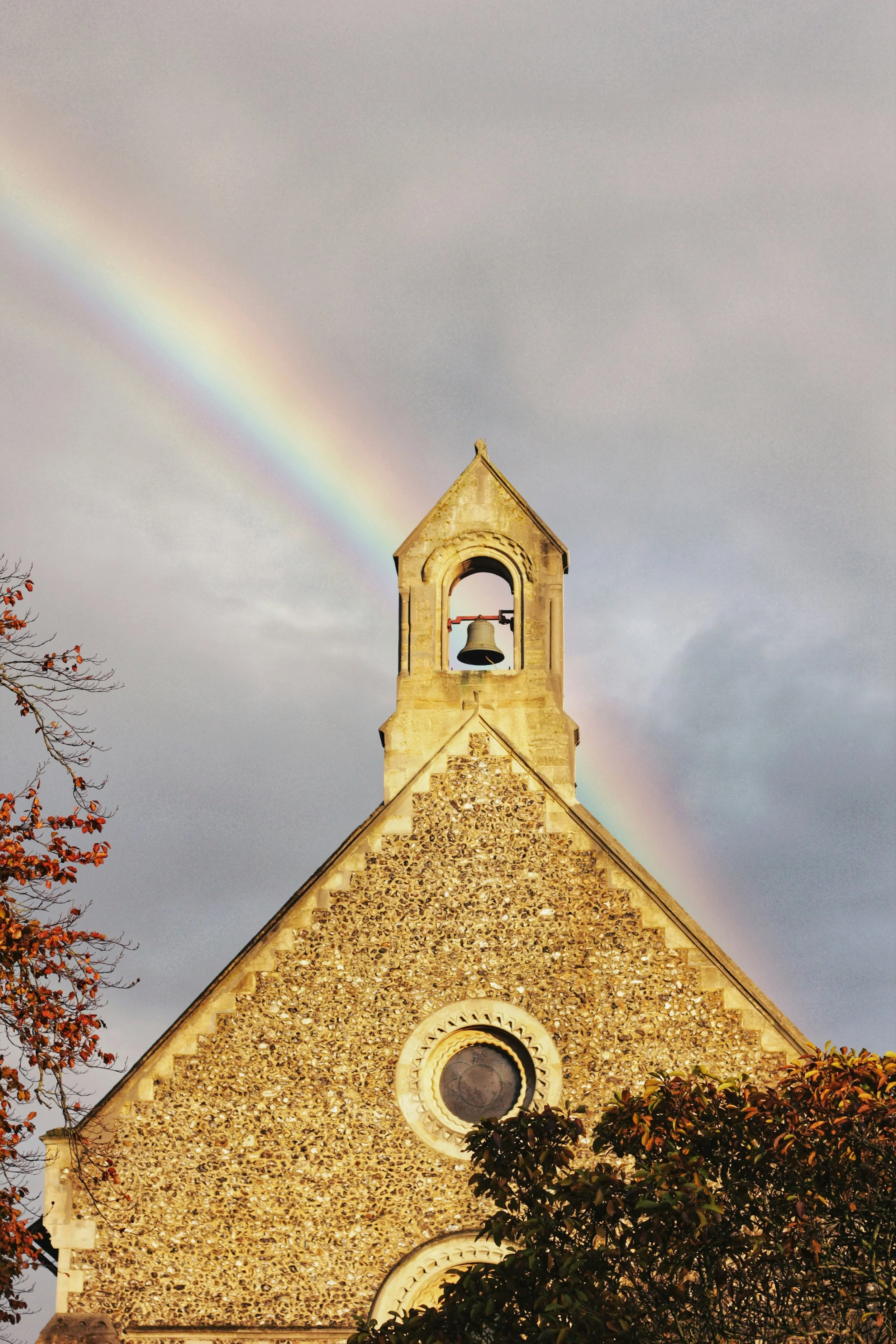
Photo by Metin Ozer on Unsplash
I spent this entire last year questioning how a trinity could make sense if an outlier like Jesus is able to exist. If modalism or tritheism are heresies, how can Jesus manifest? How can the trinity be possible? How are we supposed to understand someone born from a human to be fully human, fully divine but also be the one and the same as God and the Holy Spirit while also being in relationship to God as the “Son?”
Truly, how is someone supposed to be their own father and their own son?
Some might say I should have faith that it works that way, and that if I don’t then I do not have faith. Still, I think there is a line between something not being “faith” because of the necessity for certainty, and something being a reconciliation of faith so one can continue forward. I was desperately in need of reconciling my knowledge of the early church, doctrines on the trinity with the theology I had been taught with logic. Not certainty, but an abstract logic.
To be both father and son, you would have had to create oneself. Thinking directionally, three suggests a cycle of movement, of relationships. In reality, if it is three-in-one, then it’s a cyclical creation that is infinitely moving in relation to itself. What kind of dynamic does that create when we frame it as love? To receive love, to give love, and to be love in and of itself. It is a relationship entirely incomprehensible to the human mind, and yet it seems perfect in its composition.
Knowing oneself is part of the queer calling. It follows the well-known sentiment that “to know, is to love.”
A resolution to my struggle came from an unexpected place: the queer community.
Generations before mine were raised with a negative connotation of the word “queer.” It was a derogatory term to describe someone who might be eccentric, but also to demean others by suggesting they might be homosexual (which also had mostly negative connotations). For younger generations, the term has been reclaimed as a way to be proud of being the outcast, being the one to live outside the boxes and boundaries assigned, to be who you are unceasingly. For me and many my age, it has moved towards a more positive connotation that identifies a way of living that is true to oneself.
While “queer” may have been simply meant to mark that someone had deviated from the “norm,” what happened within early queer communities was a complete reversal of sexual and gendered expectations. Within large cities like New York and San Francisco, people found freedom to express their identity and attraction without imposed roles. The same-gender relationships that followed often transgressed some of society’s biggest paradigms:
Relationships could be more equal, with both partners earning wages, rather than the man working outside the home and the woman working unpaid at home.
People could choose the role they took in a relationship, rather than having it decided for them based on their assigned gender.
Individuals had the freedom to better understand their intrinsic sense of self, outside of the expectations of family of origin.
Relationships flourished across racial or socioeconomic boundaries.
Complex platonic relationships like lavender marriages (a marriage between two queer people, not sexually attracted to each other–often between lesbians and gay men) developed to cope with loneliness and the lack of rights surrounding same-sex marriage or other kind of unions.
In this way, queerness was (and is) much more than about the gender of people in a relationship – it was about changing everything society expected about race, money, and identity. Queerness also created (and creates) a community where people made sacrifices to protect and encourage others without personal gain. Queerness is embracing the fullness of oneself no matter how that may manifest (or at least an ongoing attempt towards it) as well as how that manifests in relationships with others.
For many, queerness is an incomprehensible love, and it is part of why it helps me reconcile this three-in-one relationship of the Trinity. It is not capable of holding up to the love present in the trinity as there are humans who can comprehend a love present in queerness, but it can create a reference point to begin to describe what unconditional love can look like.
Queerness is the way of living that evokes a love for another unconditionally and regardless of status or identity. It is a love that cannot be broken by boundaries and does not die with time. God loving godself is not self-interest. It is truly a dedicated, unceasing practice focused on loving each of the multitudes within the triune God. God created this phenomenon, possibly, to show humans the love present in the trinity and how it can be a gift bestowed onto humans if they choose to accept it and live into it. Not only can queerness be a reference point for understanding the trinity, but understanding the love we are called to give.
I believe that’s why it’s important that we recognize queerness in the trinity – to make sense of it as closely as humans can get and to realize the kind of love God wishes for us. This is not about romantic love, but about our ability to know ourselves and to be willing to fight for the safety of others even at cost to ourselves. We’re not capable of an everlasting, perfect love that can be given and/or received by anyone and especially not for ourselves. Queerness begs for a curious mind to wonder about the ways in which we are perceived and who we are outside of others’ perceptions. Knowing oneself is part of the queer calling. It follows the well-known sentiment that “to know, is to love.” In that way, we will fall short of loving, because we cannot fully know another, nor God. It is because God knows fully of us and of God’s self in all its multitudes that God must be love.
Queerness is how I best can know of God and God’s love. This will not be the same for everyone, but it is a helpful framework that embraces the kind of love we are asked to endure. It is why I am adamant that it is not just an identity, but a calling as well. It is unlikely that every queer person sees it this way either, because although I know of a God that calls me in this way - it has been, in part, due to the environment and inclusivity of the church I was raised in. It allowed me to believe in God, and most importantly, in a God that loves me for who I am. Truly, siblings in Christ, this is what we should seek out and celebrate, year-round.