Allison Connelly-Vetter
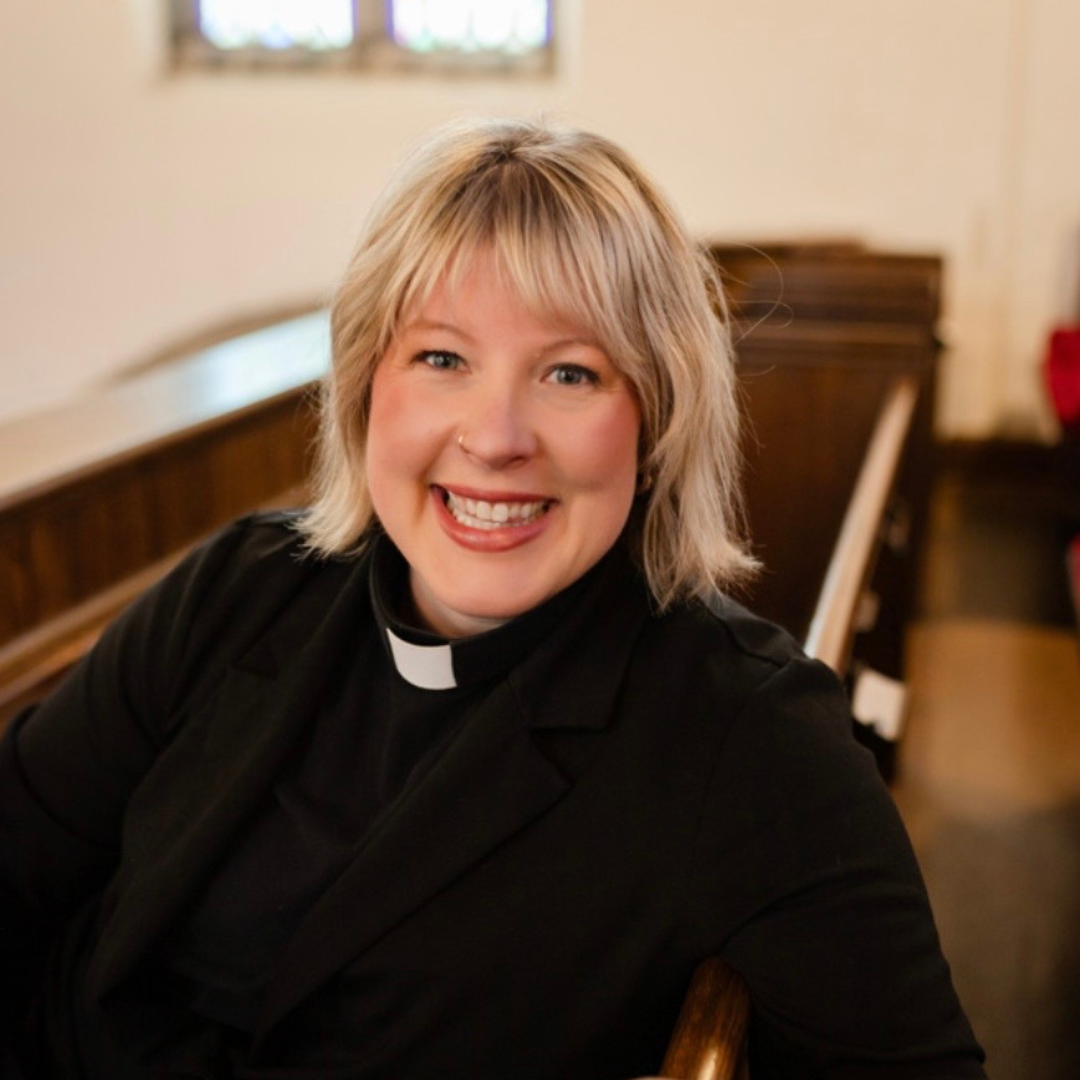
Allison Connelly-Vetter (she/her) received a Master of Divinity from Union Theological Seminary where she studied disability theology. She is the Children, Youth, and Families Program Coordinator for Spirit of St. Stephen’s Catholic Community and a racial justice organizer for the Center for Sustainable Justice at Lyndale United Church of Christ. Allison co-convenes the Disability Theology Discussion Group and serves on the United Church of Christ Disabilities Ministries Board. Her writing can be found in Dear Joan Chittister: Conversations with Women in the Church (Twenty Third Publications, 2019), Liberating Liturgies 2.0 (Women’s Ordination Conference, 2020), and Catholic Women Preach: Raising Voices and Renewing the Church Year B (forthcoming, Orbis Books). Allison and her wife Brooklyn live in Minneapolis, Minnesota.
Blog Posts
If this makes you uncomfortable, good. Let that discomfort move you toward action, toward solidarity, toward truth. This is not a moment to look away.
Psalm 88 ends with a sentence no one has ever cross-stitched onto a pillow: “Darkness is my closest friend.” And yet… the ancient community kept this psalm. They copied it. Prayed it. Sang it. Preserved it as Scripture. Why?
Each week, we’ll offer a curated selection of blog posts that speak to the upcoming lectionary texts to help spark your imagination and serve as a thought partner for you. We hope these musings meet you right where you are with a fresh, bold, and faithful witness.
Since the summer, I’ve been accompanying immigrants on many Fridays to their initial asylum hearings in New York City, watching as judges decide people’s fates while ICE agents loom over and harass asylum seekers at every turn. That experience has led me to hear the Christmas story with different ears this year – namely, as Good News proclaimed to people living on the edge of an abyss.
Each week, we’ll offer a curated selection of blog posts that speak to the upcoming lectionary texts to help spark your imagination and serve as a thought partner for you. We hope these musings meet you right where you are with a fresh, bold, and faithful witness.
There is so much life and evidence of creativity in the space left behind when they tore down the building. The large green space now has the potential to become a park, or a field for kids to play soccer, or a sculpture garden, or a home for a new family, or space for birds to fly, or…
The time is indeed now for communities to provide opportunities to channel their giving toward what they value the most: actions that provide meaning, and tangible human support in times of hardship.
Each week, we’ll offer a curated selection of blog posts that speak to the upcoming lectionary texts to help spark your imagination and serve as a thought partner for you. We hope these musings meet you right where you are with a fresh, bold, and faithful witness.
Octavia Butler and Mary the mother of Jesus both show us that love in the midst of chaos is not naïve; it is revolutionary. It is courageous. It is, quite literally, a world-making force.
For many of us shaped by immigrant families or marginalized communities, this Mary feels familiar. She looks like our abuelas—complicated, courageous, caught between survival and hope. Women who resist in their own quiet ways while also carrying the weight of harmful narratives they inherited. Women whose faith is not perfect, but persistent.
Perhaps there were adults too,
She suggests,
But in the agrarian societies
Of the First Century,
Much like in agrarian societies of today –
One of the first jobs
Of children
Was to tend the sheep and the goats
Out in the fields –
Like David
Of old.
The.
Shepherds.
Were.
Children.
Each week, we’ll offer a curated selection of blog posts that speak to the upcoming lectionary texts to help spark your imagination and serve as a thought partner for you. We hope these musings meet you right where you are with a fresh, bold, and faithful witness.
When I’m coaching, it’s not about me or my ministry. And since I’ve been bearing witness to Sandy’s ministry all year, through these sessions, site visits and engagement with her congregational leaders, I have a robust sense of why her ministry is fantastic. I could ask, “Why did you want everything about your ministry to change?” But I don’t. Instead, I just listen because coaching might be the only place Sandy gets to name these things aloud so she can hear them, share them, and loosen some of their power.
In the end, the root of all progress is community. We cannot walk through the challenges of our personal lives alone, let alone affect broader positive change. It is through shared faith, shared vision, and shared purpose that we move forward.